
Mobile Mechanic vs Roadside Assistance: Which to Call
Stuck on the road? Deciding between a mobile mechanic vs roadside assistance can be confusing. Learn the key differences in services, cost, and when to call.
MechanicDarwin Technical Team
MechanicDarwin Certified Technician

Your car has sputtered to a stop on the side of the Stuart Highway, or it simply won't start in your driveway. In that moment of frustration, you have a crucial decision to make. Understanding the difference in the Mobile Mechanic vs Roadside Assistance: Which to Call? debate is key to getting the right help, fast. The choice depends entirely on the nature of your car trouble: Is it an emergency needing a quick fix, or a more complex issue requiring expert repair?
A mobile mechanic is a qualified technician who performs detailed repairs and scheduled servicing where your car is parked, while roadside assistance provides basic, emergency fixes like jump starts, tire changes, or towing to get you moving again quickly. For car owners in Darwin and Palmerston, knowing which service fits your situation saves you time, money, and stress.
A mobile mechanic is a fully qualified and equipped auto technician who brings their workshop to you. Instead of you having to take your vehicle to a traditional garage, they travel to your home, workplace, or another convenient location with a service van stocked with tools, diagnostic equipment, and common parts. This service model is built around convenience and comprehensive care.
Unlike basic emergency responders, mobile mechanics can perform a wide range of tasks, from routine log book servicing and brake replacements to complex engine diagnostics and electrical repairs. They are the perfect solution for non-urgent issues or for vehicle owners who value the convenience of not having to rearrange their day around a workshop visit. Our team at MechanicDarwin provides this expert mobile mechanic service across Darwin and Palmerston.
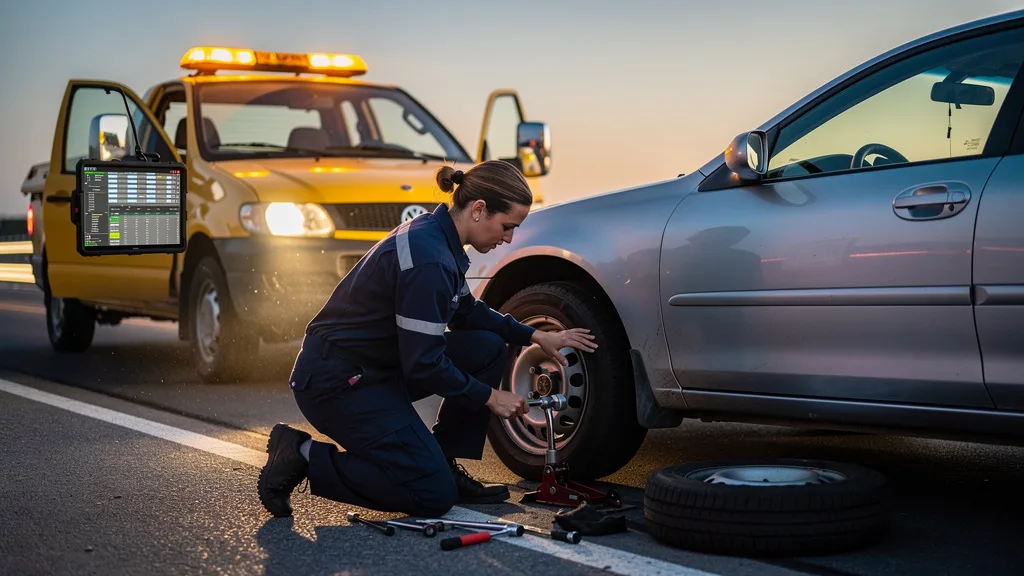
Roadside assistance is an emergency support service designed to help drivers whose vehicles have become unexpectedly disabled. The primary role of a roadside assistance provider is to offer immediate help for common, simple problems to get you back on the road as quickly as possible. If the issue cannot be resolved on the spot, their secondary function is to arrange for your vehicle to be towed to a place of repair.
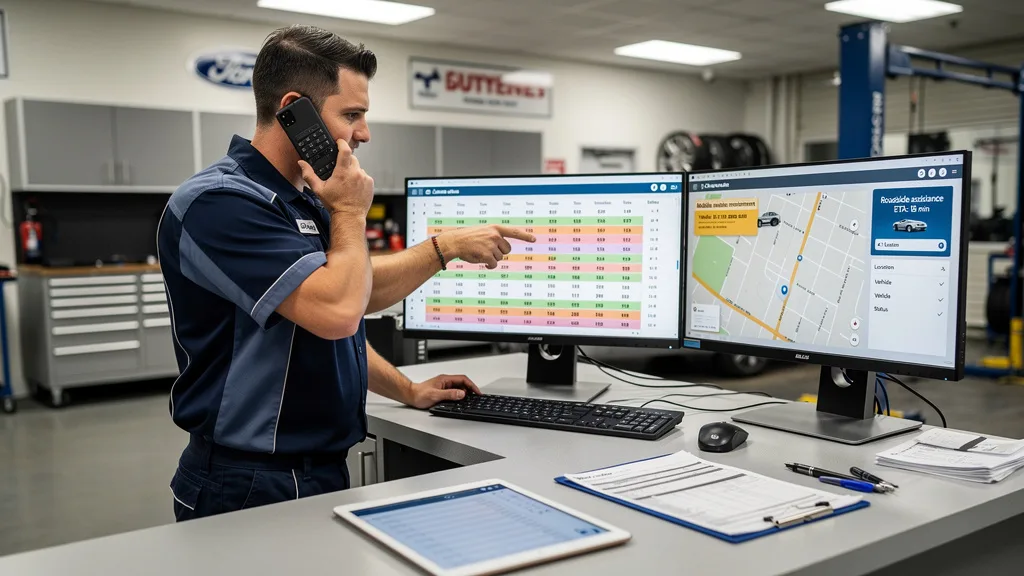
These services are typically offered through an annual membership or as an add-on to your car insurance policy. Services typically include jump-starting a flat battery, changing a flat tire with your spare, delivering a small amount of fuel if you've run out, or helping you get into your car if you're locked out. Their goal is not to perform extensive repairs but to resolve the immediate crisis.
While both services come to you, their purpose, capabilities, and cost structure are fundamentally different. Understanding these distinctions is crucial when you're deciding who to call when your vehicle breaks down or needs attention. The right choice depends on whether you need a quick patch or a proper repair.
Scope of Services and Repairs
The most significant difference lies in the scope of work each can perform. Roadside assistance is limited to a small set of predefined, simple fixes. Think of them as the first responders of the automotive world, equipped to handle the most common roadside emergencies. Their toolset is basic and tailored for speed and efficiency in these specific scenarios.
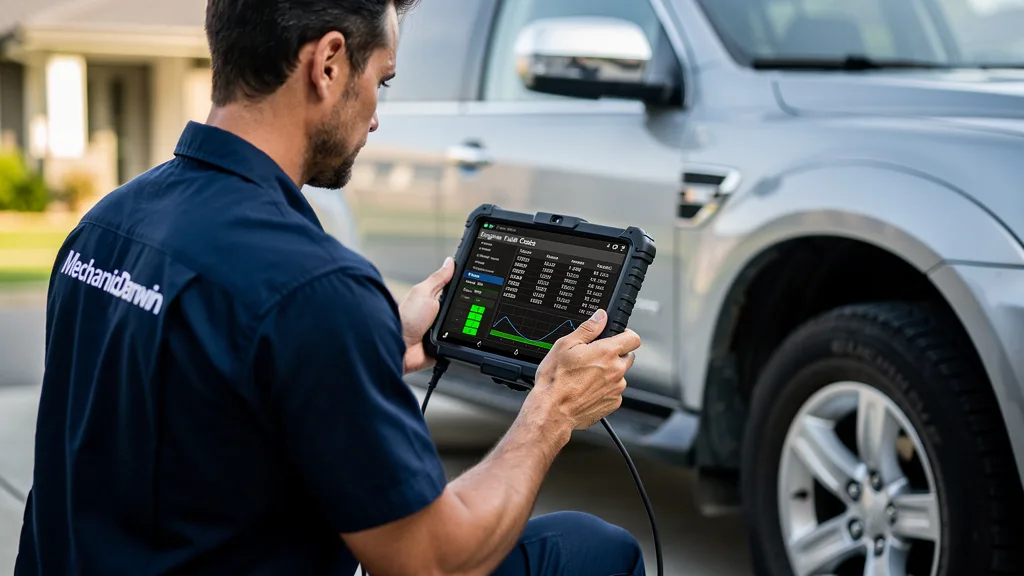
A mobile mechanic, on the other hand, operates as a workshop on wheels. They carry advanced diagnostic tools and a comprehensive set of equipment to handle a vast array of repairs and maintenance tasks. From a routine car service in Darwin's climate to diagnosing a tricky check engine light or replacing your brake pads and rotors, a qualified mobile mechanic offers a much deeper level of service.
Cost Structure and Overall Price
Roadside assistance typically operates on a subscription model. You pay an annual fee for membership, which covers the cost of call-outs throughout the year. While this provides peace of mind, it's important to note that the membership fee does not cover the cost of parts, such as a new battery or fuel, or any repairs beyond the basic service provided.
Mobile mechanics function on a pay-per-service basis, much like a traditional workshop. You pay for the specific job performed, which includes a call-out fee, labor, and the cost of any parts used. This can often be more cost-effective for individual repairs, as you are not paying an ongoing subscription and mobile mechanics tend to have lower overheads than fixed workshops, which can translate to more competitive pricing.
Typical Response Time and Availability
Because roadside assistance is an emergency service, providers aim for the fastest possible response time, often promising to be with you in under an hour, 24/7. Their entire operation is geared towards getting to stranded motorists quickly. This makes them the ideal choice when you are in an unsafe location or need immediate help.
Mobile mechanics generally operate on a scheduling system during regular business hours. While same-day or next-day appointments are often available for more urgent repairs, they are not typically an on-demand, 24/7 emergency service. They are best suited for issues that, while inconvenient, do not require an immediate, middle-of-the-night response.
Tools and Diagnostic Capabilities
A roadside assistance technician arrives with a basic toolkit designed for specific tasks: a jack and lug wrench for tires, jumper cables for batteries, and lockout tools. They do not carry advanced diagnostic equipment, so if your problem is a mysterious engine light or a performance issue, they will likely be unable to identify the root cause.
Conversely, a mobile mechanic's van is equipped with a wide array of professional tools and, crucially, modern OBD-II diagnostic scanners. This equipment allows them to read fault codes from your car's computer, analyze sensor data, and accurately diagnose complex mechanical and electrical problems. This capability is essential for any issue that isn't immediately obvious.
When to Call a Mobile Mechanic
Knowing the right situations to call a mobile mechanic ensures you get the most value and convenience from the service. It's the smart choice when your car problem requires expertise and a proper repair, but doesn't pose an immediate danger.
For Scheduled Maintenance and Non-Urgent Repairs
A mobile mechanic is perfect for all your routine car maintenance needs. This includes log book servicing to maintain your warranty, oil and filter changes, brake inspections, and fluid top-ups. If you know your car needs a new set of brake pads or has a minor, non-critical leak, you can schedule a mobile mechanic to come to your home or office at a time that suits you. This eliminates the hassle of dropping off and picking up your car from a workshop.
For Complex Diagnostics at Your Home or Office
Is your check engine light on? Is the car making a strange noise or running rough? These are situations where a mobile mechanic excels. Instead of driving a potentially problematic vehicle to a shop, you can have a technician come to you to perform a thorough diagnostic check. They can identify the root cause of the issue on-site and, in most cases, perform the necessary repair right then and there. routine log book servicing.
When You Prefer a Dedicated Mechanic
Using a mobile mechanic service often allows you to build a relationship with a specific technician. You can speak directly to the person working on your car, ask questions, and receive firsthand information about your vehicle's condition. This personalized approach is a stark contrast to the often anonymous nature of both roadside assistance providers and larger workshops, offering greater peace of mind and trust.
"Choosing a mobile mechanic means you get a dedicated, qualified technician focused entirely on your vehicle's health, not just a quick fix to get you off the road. It's about comprehensive care and convenience."
When to Call Roadside Assistance
Roadside assistance is your go-to for specific, urgent situations where you are stranded and need immediate help. Their service is designed for crisis resolution, not in-depth automotive repair.
For Common Roadside Emergencies
This is the primary purpose of roadside assistance. If you have a flat battery, a flat tire (and a working spare), have run out of fuel, or accidentally locked your keys in the car, they are the right people to call. These are the classic scenarios their service is built to handle efficiently, getting you moving with minimal delay.
When Your Vehicle Needs to Be Towed
If your car has suffered a major mechanical failure (like a failed transmission or engine seizure) or has been in an accident, it will likely be undrivable. In these cases, the problem is far beyond a simple roadside fix. The main value of your roadside assistance provider here is their ability to arrange and often cover the cost of a tow to the nearest repair facility or your preferred mechanic.
For Simple Fixes like Jump Starts or Tire Changes
These are the quintessential roadside assistance jobs. While a mobile mechanic can certainly perform these tasks, a roadside service is often faster and more cost-effective for these specific issues, especially if you have a membership. When you're in a tricky situation with your car and just need that simple, immediate fix, they are your best bet.
Pros and Cons of Each Service for 2026
As we look at car ownership in 2026, understanding the benefits and drawbacks of each service helps you make an informed financial and practical decision. Convenience, cost, and capability are the defining factors.
The mobile mechanic model offers significant benefits, but it's important to be aware of its limitations as well.
- Advantages:
- Convenience: Service at your home or work saves you time and hassle.
- Comprehensive Repairs: Ability to handle a wide range of complex mechanical and electrical issues.
- Transparent Pricing: You often receive a fixed quote before work begins.
- Direct Communication: Speak directly with the technician working on your car.
- Downsides:
- Limited Availability: Not typically a 24/7 emergency service.
- Workshop Limitations: Very large jobs requiring heavy machinery (e.g., engine rebuilds) may still need a full workshop.
- Call-Out Fee: A fee is usually charged for the mechanic to travel to you, which is factored into the total cost.
- Mobile Mechanic: Best for scheduled maintenance, complex diagnostics, and non-emergency repairs at your location. They are qualified mechanics offering comprehensive services.
- Roadside Assistance: Best for roadside emergencies like flat tires, dead batteries, lockouts, or when you need a tow. They provide quick, simple fixes.
- Core Difference: A mobile mechanic is there to repair your car properly, while roadside assistance is there to rescue you from a bad situation.
- Cost Model: Mobile mechanics are pay-per-service, whereas roadside assistance is typically an annual subscription.
Is a Roadside Assistance Membership Worth It?
Deciding whether to pay for a roadside assistance membership depends on your vehicle, driving habits, and risk tolerance. For owners of older, less reliable cars or those who frequently travel long distances, the annual fee can be a worthwhile investment for peace of mind. The cost of a single tow can often exceed the price of an entire year's membership.
However, for those with newer, reliable vehicles who primarily drive locally, the membership may be less essential. Many new cars come with complimentary roadside assistance for a few years. It's a form of insurance: you hope you never need it, but you're glad to have it when you do. Some providers like Roadside Assistance Sydney 24/7 highlight the round-the-clock nature of this emergency service.
Key Takeaways
Frequently Asked Questions
What is another name for a mobile mechanic?
A mobile mechanic is often referred to by several other names that describe their on-the-go service model. You might hear terms like "mobile auto technician," "on-site mechanic," or sometimes "roving mechanic." These all refer to a professional mechanic who travels to the customer's location to perform vehicle repairs and servicing.
Which roadside assistance service is best in Australia?
There isn't a single "best" roadside assistance service for everyone in Australia, as it depends on your location and needs. Major state-based clubs like the AANT (NT), NRMA (NSW), RACV (VIC), RACQ (QLD), RAA (SA), and RAC (WA) are highly regarded. National providers and some insurance companies also offer competitive plans. The best choice involves comparing coverage areas, included benefits (like towing distance and call-out limits), and annual cost.
Can a mobile mechanic fix any car problem?
Mobile mechanics can fix the vast majority of car problems, estimated to be around 80-90% of all common repairs. This includes servicing, brakes, suspension, diagnostics, and many electrical issues. However, major jobs that require heavy-duty lifts or specialized workshop equipment, such as a full engine or transmission rebuild, are typically still performed at a fixed workshop location.
Does roadside assistance cover the cost of parts and repairs?
Generally, no. A roadside assistance membership covers the cost of the service call-out and the immediate labor for the simple fix, such as the time it takes to change your tire or jump-start your battery. You are responsible for paying for any required parts, like a new battery, replacement tire, or the cost of fuel delivered to you. If your car is towed, the membership covers the tow, but not the subsequent repair bill from the mechanic.
Is a mobile mechanic more expensive than a traditional auto shop?
Not necessarily. While they have costs associated with travel, mobile mechanics have significantly lower overheads than a traditional auto shop, as they don't have to pay rent on a large commercial garage. These savings can be passed on to the customer, making their labor rates very competitive. Comparing a mobile mechanic vs. a workshop visit often reveals that for many common jobs, the final cost is very similar, but the convenience is far greater.
Conclusion
Ultimately, the choice in the Mobile Mechanic vs Roadside Assistance: Which to Call? dilemma boils down to a single question: do you need an immediate rescue or a comprehensive repair? Roadside assistance is your emergency first responder for simple problems that leave you stranded. A mobile mechanic is your personal, on-demand technician for scheduled maintenance and complex diagnostics, bringing the workshop's expertise directly to your door. Understanding this core difference empowers you to make the right call every time.
For non-emergency diagnostics, scheduled servicing, or expert repairs right in your Darwin or Palmerston driveway, a mobile mechanic is the clear choice. Our certified technicians bring the workshop to you, providing transparent quotes and quality workmanship. Ready for convenient car care? Book a Service with MechanicDarwin today.
Written by MechanicDarwin Technical Team
MechanicDarwin Trade-Qualified Technician
Trade-qualified technician at MechanicDarwin with extensive experience diagnosing and repairing vehicles under extreme Northern Territory conditions.