
Tools for Basic Car Servicing at Home in Darwin for 2026
Equip your home garage with the essential tools for basic car servicing in Darwin. Our 2026 guide covers hand tools, jacks, safety gear, and more.
MechanicDarwin Technical Team
MechanicDarwin Certified Technician

Are you ready to take control of your vehicle's health but unsure where to start? Performing basic car maintenance at home can save you time and money, especially in Darwin where staying on top of your vehicle's condition is crucial. Having the right tools is the first and most important step to completing jobs safely and efficiently, preventing minor issues from becoming major, costly repairs.
The essential tools for basic car servicing at home in Darwin include a good socket and ratchet set, combination wrenches, a hydraulic jack with axle stands for safety, and specific tools for fluid changes like an oil drain pan and filter wrench. For modern vehicles, a basic OBD2 code reader is also invaluable for diagnosing check engine lights. This foundational kit allows you to handle oil changes, brake checks, and other routine maintenance tasks confidently.
Safety First: Essential Gear for Your Home Garage
Before you even think about loosening a bolt, your first priority must be safety. Working on a vehicle, which can weigh over two tonnes, carries inherent risks. Equipping your home garage with the proper safety gear is non-negotiable. It protects you from injury and creates a secure environment for you to focus on the task at hand. Never compromise on safety equipment, as it's the most important investment you'll make for your DIY automotive work.
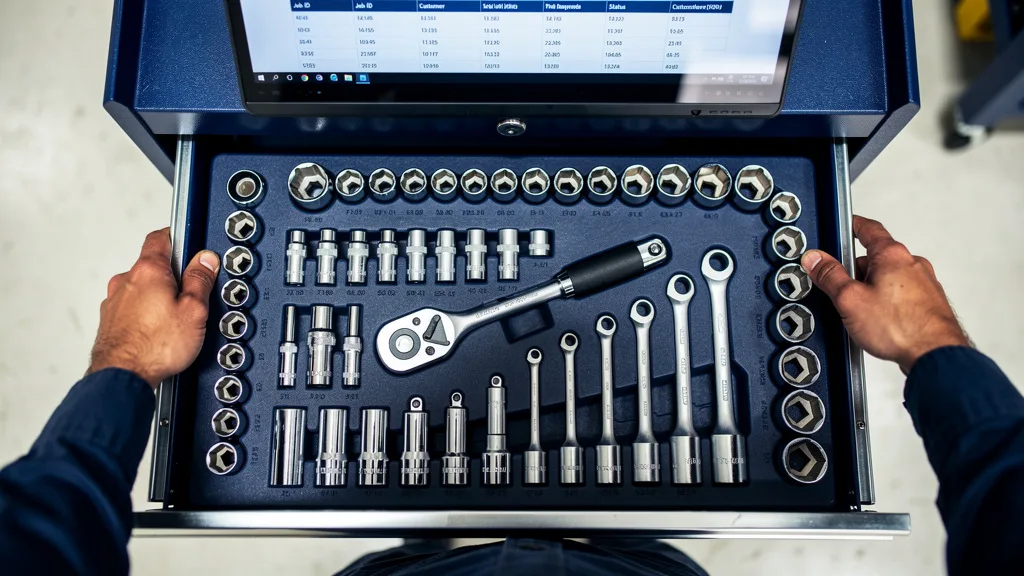
A clean, organised workspace is a safe workspace. Ensure your garage floor is free of clutter, spills, and trip hazards. Good lighting is also critical for seeing what you're doing clearly, which is why a reliable inspection light or headlamp is a must have. Always work in a well-ventilated area, especially when the engine is running, to avoid exposure to carbon monoxide fumes.
Personal Protective Equipment (PPE)
Personal Protective Equipment, or PPE, is your first line of defence against common garage injuries. These items are designed to protect you from cuts, burns, chemical exposure, and impact injuries. Always have a dedicated set of PPE available and make a habit of using it for every job, no matter how small it seems.
Your basic PPE kit should include:
- Safety Glasses: Protect your eyes from flying debris, fluid splashes, and dust. Wraparound styles offer the best protection.
- Mechanic's Gloves: Nitrile or latex gloves protect your hands from oil, grease, and chemicals, while heavy-duty fabric gloves offer better protection against cuts and burns.
- Steel-Capped Boots: Protect your feet from falling tools or parts. They also provide better grip on potentially slippery surfaces.
- Overalls or Old Clothing: Wear durable clothing that you don't mind getting dirty and that won't get caught in moving parts.
Fire Safety and First Aid Kits
Accidents can happen even in the most prepared settings. Having fire safety equipment and a first aid kit within easy reach is essential. Automotive fluids like petrol and brake fluid are highly flammable, so a fire extinguisher rated for Class B (flammable liquids) and Class C (electrical) fires is a garage essential. Store it in a visible, easily accessible location away from your immediate work area.
A well-stocked first aid kit is just as important. Your kit should contain bandages, antiseptic wipes, burn cream, and eyewash solution to treat minor cuts, scrapes, and burns immediately. Check your fire extinguisher and first aid kit annually to ensure they are in good working order and that supplies have not expired.
The Core Hand Tools for Basic Car Maintenance
With safety covered, it's time to build your collection of hand tools. A quality set of hand tools forms the backbone of any home mechanic's toolkit. These are the instruments you'll use for the vast majority of tasks, from simple checks to more involved part replacements. Investing in good quality tools from the start will pay dividends, as they are less likely to break or damage fasteners on your vehicle.
When starting out, you don't need to buy the most expensive professional-grade set. A comprehensive starter kit from a reputable brand will be more than sufficient for most DIY car maintenance jobs. Look for tools made from durable materials like chrome vanadium steel, which offers a good balance of strength and rust resistance. Understanding how often to service your car will help you get the most use out of these tools.
Socket and Ratchet Set
A socket and ratchet set is arguably the most important part of your toolkit. This versatile set allows you to quickly tighten and loosen a wide variety of nuts and bolts. A good starter set should include a range of metric sockets, as most modern cars use metric fasteners. Look for a kit with multiple drive sizes, typically 1/4-inch, 3/8-inch, and 1/2-inch, to handle everything from small interior fasteners to large suspension bolts.
Your set should also include a few extension bars to help you reach bolts in tight spaces and a universal joint for accessing fasteners at an angle. Spark plug sockets, which have a rubber insert to protect the ceramic part of the spark plug, are also a valuable addition. A quality ratchet with a fine-tooth mechanism makes working in confined areas much easier.
Combination Wrench Set
While sockets are versatile, there are times when a wrench is the better tool for the job. A combination wrench set, which features an open end on one side and a box-end (ring) on the other, is essential. The open end is great for quickly turning fasteners in accessible areas, while the box-end provides a more secure grip to prevent rounding off bolt heads.
Like your socket set, you will primarily need a metric set of wrenches, typically ranging from 8mm to 19mm. Ratcheting wrenches can be a great time-saver, but a standard set is perfectly adequate for starting out. They are indispensable for tasks like brake line work or holding a nut while you tighten a bolt with a ratchet.
Screwdrivers and Pliers
A good selection of screwdrivers and pliers is necessary for any toolkit. You'll need a variety of Phillips head and flathead screwdrivers in different sizes to handle screws found throughout your vehicle's interior and engine bay. A set with magnetic tips can be incredibly helpful for preventing screws from dropping into hard-to-reach places.
For pliers, a basic collection should include combination pliers for gripping and cutting, needle-nose pliers for reaching into tight spots and handling small clips, and adjustable slip-joint pliers (or multigrips) for larger items. These tools are crucial for dealing with hose clamps, electrical connectors, and various clips and fasteners used in modern cars.
Essential Torque Wrench
A torque wrench is a precision instrument that many beginners overlook, but it is one of the most critical automotive repair tools for ensuring safety and reliability. It allows you to tighten nuts and bolts to the manufacturer's specified torque setting. Over-tightening can damage threads or components, while under-tightening can lead to parts coming loose, which can be extremely dangerous, especially with wheels and suspension components.
There are several types of torque wrenches, but a click-type wrench is affordable, easy to use, and accurate enough for most DIY tasks. Start with a 3/8-inch or 1/2-inch drive torque wrench that covers the range you'll need for common jobs like tightening wheel lug nuts. Always consult your vehicle's service manual for the correct torque specifications.
"Using a torque wrench isn't optional; it's a fundamental part of doing the job right. Every critical fastener on your car, from the sump plug to the wheel nuts, has a specific torque setting for a reason. Guessing is not good enough when your safety is on the line." - Senior Technician, MechanicDarwin
Lifting and Supporting Your Vehicle Safely
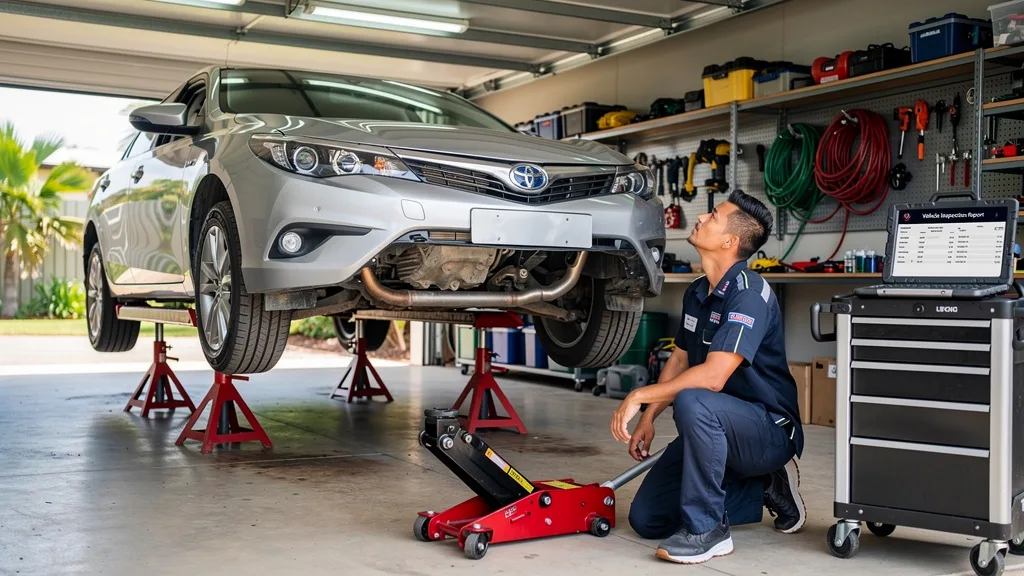
Many basic maintenance tasks require you to get underneath your vehicle. Lifting a car off the ground must be done with extreme care using the correct equipment. Never, under any circumstances, work under a car that is only supported by a jack. The jack is only for lifting; axle stands are for supporting.
Before lifting, ensure your car is on a flat, level, and solid surface like a concrete garage floor. Engage the handbrake and put the car in Park (for automatics) or in gear (for manuals). Knowing the correct jacking points on your vehicle is crucial to avoid damaging the car's frame or underbody. These are typically reinforced areas of the chassis, and their locations can be found in your owner's manual.
Hydraulic Trolley Jack
The scissor jack that comes with your car is designed for emergency roadside use only. For garage work, you need a proper hydraulic trolley jack. These jacks are more stable, easier to position, and can lift the vehicle with far less effort. When choosing a jack, make sure its weight rating is sufficient for your vehicle. A 2-tonne jack is generally adequate for most passenger cars, but you may need a 3-tonne or higher model for larger 4WDs and utes.
Look for a low-profile jack if you have a car with low ground clearance. A jack with a long handle provides better leverage, making lifting easier. Always lift the vehicle using the manufacturer-specified jacking points to prevent damage.
Axle Stands for Secure Support
Axle stands (also called jack stands) are the most critical piece of safety equipment for working underneath your car. Once the vehicle is lifted to the desired height with the trolley jack, you must place axle stands under a strong, stable part of the chassis or suspension to support the weight. Gently lower the car onto the stands and ensure it is stable before you even think about getting underneath.
Like jacks, axle stands have a weight rating. Always use them in pairs and ensure their combined rating exceeds the weight of the vehicle. Choose stands with a positive locking mechanism, such as a pin or a ratchet system, for maximum security.
Wheel Chocks and Creepers
Wheel chocks are simple but essential safety devices. Before you lift the vehicle, place chocks behind the wheels that will remain on the ground to prevent the car from rolling. This adds an extra layer of security, especially if your garage floor isn't perfectly level.
A creeper is a low-profile board with wheels that allows you to comfortably lie on your back and roll underneath the car. While not strictly a safety item, it makes working under the vehicle much more comfortable and efficient, reducing strain on your back and neck. It also helps keep your clothes cleaner.
Essential Tools for Fluid Changes and Management
Changing your vehicle's fluids, such as the engine oil, coolant, and brake fluid, is one of the most common and important DIY maintenance tasks. Having the right tools for these jobs makes them cleaner, faster, and easier. These tools are designed to help you drain, capture, and refill fluids without making a mess.

Proper disposal of used automotive fluids is also critical. Used engine oil, coolant, and brake fluid are hazardous materials and must not be poured down the drain or thrown in the bin. Most council recycling centres and some auto parts stores accept used fluids for recycling. For complex jobs or if you're unsure, our team offers professional car servicing in Darwin.
Oil Drain Pan and Funnels
An oil drain pan is a must-have for changing your engine oil. Choose a pan with a capacity larger than your engine's oil capacity (typically 5-7 litres for most cars) to prevent overflow. Many drain pans feature a spout and a sealed cap, making it easy to transport the used oil for disposal without spills.
A good set of funnels is also essential for refilling fluids cleanly. Have a few different sizes on hand. It's a good practice to use a dedicated funnel for each type of fluid (oil, coolant, washer fluid) to avoid cross-contamination.
Oil Filter Wrench
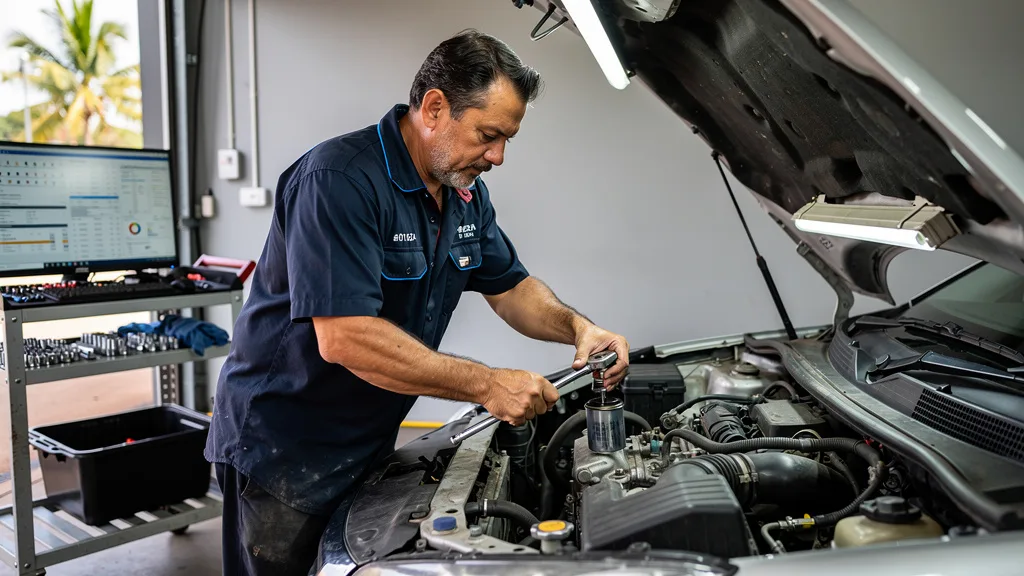
Oil filters are often located in tight spaces and can be very difficult to remove by hand, especially if they were overtightened. An oil filter wrench provides the necessary leverage to loosen them. There are several types available, including cap-style wrenches that fit over the end of the filter like a socket, strap wrenches, and claw-type wrenches. A cap-style set is often the most effective, but you'll need the right size for your specific vehicle.
Before installing a new filter, always apply a thin layer of new engine oil to the rubber gasket. This helps create a good seal and makes it easier to remove the filter at the next oil change. Hand-tighten the new filter, then give it an additional quarter to a half turn with the wrench, but be careful not to overtighten.
Brake Bleeder Kit
If you plan on working on your brakes, a brake bleeder kit is a valuable tool. Brake fluid is hygroscopic, meaning it absorbs moisture from the air over time, which can reduce braking performance and cause corrosion. Bleeding the brakes removes old fluid and any air bubbles from the system. A one-person brake bleeder kit, which uses a vacuum pump or a one-way valve, makes this job much easier than the traditional two-person method.
Working with brake fluid requires care as it can damage your car's paint. Always have rags on hand to clean up any spills immediately. Following the correct bleeding sequence for your vehicle, which can be found in your service manual, is crucial for ensuring all air is removed from the system.
Basic Diagnostic and Electrical System Tools
Modern vehicles are heavily reliant on electronics. While complex electrical issues are best left to professionals, having a few basic diagnostic tools can help you troubleshoot common problems, from a dead battery to a mysterious check engine light. These tools can save you a trip to the workshop for simple fixes.
Understanding what the warning lights on your dashboard mean is the first step. These tools help you look beyond the light and get to the root cause of the problem. If a problem seems too complex, it's always wise to consult a professional. Our mobile mechanic service in Darwin can come to you to diagnose more serious issues.
Automotive Multimeter
An automotive multimeter is an incredibly versatile tool for diagnosing electrical problems. It can be used to test battery voltage, check fuses, test sensors, and trace wiring faults. A basic digital multimeter is affordable and sufficient for most DIY tasks. Learning to use it can feel intimidating at first, but it opens up a new world of troubleshooting capabilities.
One of the most common uses for a multimeter is to check your battery's health. A healthy, fully charged car battery should read around 12.6 volts with the engine off. With the engine running, it should read between 13.7 and 14.7 volts, which indicates that the alternator is working correctly.
OBD2 Code Reader
Since 1996, all cars have been equipped with an On-Board Diagnostics (OBD2) port. When your check engine light comes on, the car's computer stores a Diagnostic Trouble Code (DTC) that indicates the nature of the problem. An OBD2 code reader is a simple device that plugs into this port and reads these codes.
A basic code reader will give you the code itself (e.g., P0420), which you can then look up online to find out what it means. This can help you determine if the issue is something simple you can fix yourself, like a loose gas cap, or something more serious that requires professional attention. More advanced scanners can provide live data from the car's sensors, offering deeper diagnostic insights.
Inspection Light or Headlamp
Good visibility is crucial when working on a car. Engine bays and undercarriages are full of dark corners, and a reliable light source is essential. While a simple torch can work, a dedicated inspection light or a headlamp is far better. LED lights are bright, durable, and energy-efficient.
A headlamp is particularly useful as it keeps your hands free to hold tools and work. Look for a rechargeable model with adjustable brightness settings. Many inspection lights also have magnetic bases or hooks, allowing you to position them securely while you work.
Protecting Your Tools in Darwin's Humid Climate
Darwin's tropical climate presents a unique challenge for tool ownership: high humidity. The constant moisture in the air can quickly lead to rust and corrosion, ruining your investment. Taking proactive steps to protect your tools is essential for ensuring they last for years to come. Proper storage and regular maintenance are key.
This is especially important for precision instruments like torque wrenches and multimeters, which can be damaged by moisture. The 'build-up' and wet season are particularly tough on metal tools, so it's a good time to review your storage strategy. Taking these precautions is just as important as preparing your vehicle for the wet season.
Proper Tool Storage Solutions
The best way to protect your tools from humidity is to store them in a closed environment. A good quality, lockable tool chest or cabinet is the best option. The sealed environment helps to keep ambient moisture out. Avoid leaving tools out on an open workbench for extended periods.
To further combat moisture, consider placing desiccant packs (like silica gel) or a small, rechargeable dehumidifier inside your tool chest drawers. These products absorb moisture from the enclosed air, creating a drier micro-environment that inhibits the formation of rust.
Here is a summary of tool storage solutions:
| Storage Solution | Best For | Humidity Protection |
|---|---|---|
| Portable Tool Box | Basic starter kits, mobility | Good (when closed) |
| Rolling Tool Chest | Larger collections, organization | Excellent (add desiccants) |
| Wall-Mounted Pegboard | Frequently used tools, visibility | Poor (open to air) |
| Tool Cabinet | Secure and comprehensive storage | Excellent (best with dehumidifier) |
Rust Prevention and Maintenance Tips
Regular maintenance is crucial for keeping your tools in top condition. After each use, wipe your tools down with a clean, dry rag to remove any grease, dirt, and moisture from your hands. This simple step can significantly prolong their life.
For added protection, periodically apply a light coat of a rust-inhibiting oil or a specialized tool protector spray to the metal surfaces of your tools. Pay special attention to unpainted or unplated surfaces. A quick wipe with a cloth lightly dampened with WD-40 or a similar product can create a protective barrier against moisture. For tools that already show signs of light surface rust, a gentle scrub with fine-grade steel wool and some oil can often remove it.
Key Takeaways
Equipping your home garage for basic car servicing is an achievable goal that empowers you to take better care of your vehicle. By focusing on safety first and building a quality core toolkit, you can confidently tackle a range of maintenance tasks. Remember that in Darwin's climate, protecting your tool investment from humidity is just as important as buying the right tools in the first place.
- Safety is Paramount: Always use PPE, a proper jack and axle stands, and have fire safety and first aid equipment ready.
- Build a Core Kit: Start with a quality socket and wrench set, screwdrivers, pliers, and a torque wrench. These will handle most basic jobs.
- Invest in Diagnostics: A simple OBD2 reader and a multimeter can save you time and money by helping you diagnose common electrical faults and check engine lights.
- Manage Fluids Correctly: Use the right tools like drain pans and filter wrenches to make fluid changes clean and easy. Always dispose of used fluids responsibly.
- Protect Your Investment: In Darwin's humid climate, proper storage in a tool chest with desiccants or a dehumidifier is essential to prevent rust and prolong the life of your tools.
Frequently Asked Questions
What are the top 10 mechanic tool brands?
Choosing a tool brand often comes down to budget and preference. For professional mechanics, brands like Snap-on, Mac Tools, and Matco are top-tier but come with a premium price. For serious DIYers and home mechanics, brands such as Sidchrome, Kincrome, Stanley, and Repco's own brand offer an excellent balance of quality, durability, and value. Other reputable brands to consider include GearWrench, known for their ratcheting wrenches, Bahco, and Crescent.
When starting out, a comprehensive kit from a mid-range brand like Stanley or Sidchrome is a fantastic investment. These brands typically offer lifetime warranties on their hand tools, providing great peace of mind. It's often better to buy a good quality set from a reputable brand than a larger, cheaper set from an unknown manufacturer.
Is 120,000 km considered a major car service?
Yes, a 120,000 km service is generally considered a major service for most vehicles. While specific requirements vary by manufacturer, this service interval often includes all the items from a minor service (like an oil and filter change) plus the replacement of more significant components. This can include replacing the engine air filter, cabin air filter, spark plugs, and potentially the timing belt or timing chain if specified by the manufacturer.
This service is also a critical time for a thorough inspection of the vehicle's major systems, including the brakes, suspension, steering, and cooling system. Due to the complexity and the special tools that may be required (especially for a timing belt), a major service at this mileage is often best left to qualified technicians.
What are the '4 Cs' in automotive maintenance?
The '4 Cs' is a simple framework used to remember the core areas of customer concern and vehicle inspection in automotive maintenance. They stand for Complaint, Cause, Correction, and Confirmation. First, you identify the 'Complaint' or the issue the vehicle is having. Second, you investigate to find the 'Cause' of the problem through diagnostics and inspection. Third, you perform the 'Correction', which is the actual repair or replacement of the faulty part. Finally, you 'Confirm' that the repair has solved the original complaint, usually through a test drive.
This systematic approach ensures that problems are diagnosed accurately and repaired effectively. It's a professional methodology that can be just as useful for a DIYer at home to ensure you are not just replacing parts without confirming you have fixed the root cause of the issue.
What are the most basic car maintenance tasks I can do myself?
With the essential tools listed in this guide, there are several basic maintenance tasks you can confidently perform at home. The most common DIY jobs include changing the engine oil and oil filter, checking and topping up all essential fluids (coolant, brake fluid, power steering fluid, washer fluid), and replacing the engine air filter and cabin air filter. You can also inspect and replace windscreen wiper blades and check your tyre pressures and tread depth.
Another straightforward task is testing and replacing your car's battery. These tasks are great for beginners as they require minimal tools, have plenty of online tutorials available, and can save you money on labour costs. Always start with simple jobs to build your confidence.
Where can I buy quality car service tools in Darwin?
In Darwin, you have several good options for purchasing quality automotive tools. For a wide selection and well-known brands, stores like Repco and Supercheap Auto are excellent starting points. They cater to both DIY enthusiasts and professionals and often have knowledgeable staff who can offer advice. You can also find good quality tool kits at hardware stores like Bunnings, which stock brands like Stanley and Sidchrome.
For more specialized or professional-grade tools, you might look at trade suppliers like Total Tools or Sydney Tools. It's always a good idea to handle the tools before you buy them to get a feel for their quality and ergonomics. Don't forget to look out for sales, as you can often get great deals on comprehensive tool kits.
Conclusion
Building a toolkit for basic car servicing is a rewarding first step towards becoming more self-sufficient with your vehicle maintenance. By starting with essential safety gear and a core set of quality hand tools, you can handle many routine tasks yourself, saving money and gaining a deeper understanding of your car. For those bigger jobs or when you need an expert eye, remember that professional help is always available. Armed with the right tools and knowledge, you can keep your vehicle running reliably on Darwin's roads.
When a job feels too big or you don't have the right equipment, don't hesitate to call in the experts. Our qualified technicians at MechanicDarwin are equipped to handle everything from basic servicing to complex repairs, either at our workshop or right in your driveway. For honest, upfront service you can trust, schedule your next appointment with us. You can Book a Service online today.
Written by MechanicDarwin Technical Team
MechanicDarwin Trade-Qualified Technician
Trade-qualified technician at MechanicDarwin with extensive experience diagnosing and repairing vehicles under extreme Northern Territory conditions.