
DIY vs Pro Brake Repair Darwin: Which to Choose in 2026
Considering DIY brake repair in Darwin? Compare the costs, risks, and benefits against a professional service to make the safest choice for 2026.
MechanicDarwin Technical Team
MechanicDarwin Certified Technician

When your car's brakes start to squeal, are you tempted to save a few dollars by tackling the job yourself? The decision between DIY Brake Repair vs Professional Service in Darwin is a critical one, balancing upfront cost savings against the absolute necessity of safety and reliability. While a DIY approach can seem appealing, a professional service ensures the job is done correctly with guaranteed parts and workmanship, providing invaluable peace of mind on the road.
For Darwin drivers, choosing between DIY and professional brake repair involves weighing your mechanical skill, tool availability, and time against the expertise and guarantees offered by a certified mechanic. A professional service not only replaces worn components but also inspects the entire braking system for potential issues, a crucial step often missed in a home garage. This comprehensive approach is vital for ensuring your vehicle is safe for you and your family.
Understanding DIY Brake Repair: What's Involved
Embarking on a DIY brake repair project requires more than just enthusiasm. It is a technically demanding job where precision is paramount. Before you even lift the car, you need a clear understanding of your vehicle's specific braking system, which can vary significantly between makes and models. The process generally involves jacking up the vehicle, securing it on stands, removing the wheels, disassembling the brake calipers, replacing the pads and sometimes the rotors, and then reassembling everything to exact torque specifications.
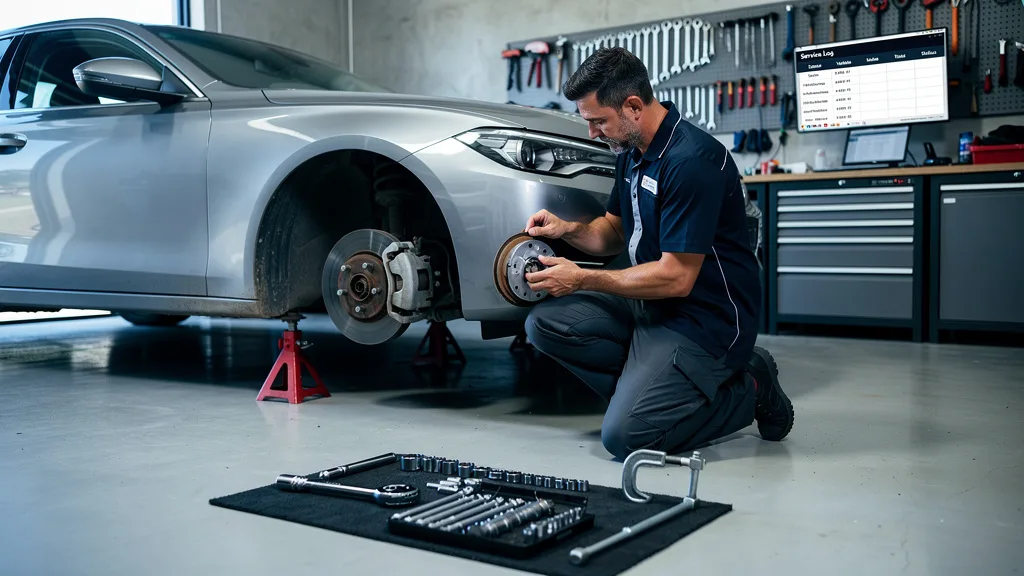
Any misstep during this process can lead to brake failure, making it one of the higher-stakes maintenance tasks you can perform at home. It's crucial to follow a detailed service manual for your specific vehicle and double-check every step. Without the proper knowledge, what seems like a straightforward task can quickly become complex and dangerous.
Required Tools, Parts, and Expertise
A successful DIY brake job depends on having the right equipment. A simple socket set won't be enough. You will need a specific set of tools to perform the job safely and correctly. Without these, you risk damaging parts or performing an incomplete and unsafe repair.
Essential tools and parts include:
- A high-quality hydraulic jack and sturdy jack stands.
- A lug wrench for removing wheels.
- A socket and wrench set, including a torque wrench.
- A C-clamp or brake caliper piston tool to retract the piston.
- Brake cleaner spray and a wire brush.
- High-temperature brake grease.
- New brake pads and/or rotors specific to your vehicle.
- Fresh brake fluid if you plan on bleeding the brakes.
Beyond the tools, you need a solid foundation of mechanical expertise. This includes knowing how to safely lift and secure a vehicle, understanding how a hydraulic brake system works, and being able to diagnose related issues like a seized caliper or a leak in a brake line. This level of knowledge is not something that can be quickly learned from a short online video.
Typical Time Commitment and Difficulty Level
For an experienced home mechanic, replacing the brake pads and rotors on one axle might take two to four hours. However, if you are a novice, you should budget an entire afternoon or even a full day. This accounts for setup, the learning curve, and any unexpected complications, such as a stubborn bolt or a part that doesn't fit correctly. Rushing a brake job is one of the biggest mistakes you can make.
On a scale of difficulty, brake repair is generally considered intermediate to advanced for DIY auto maintenance. While replacing pads is manageable for some, tasks like replacing calipers, bleeding the brake system, or dealing with electronic parking brakes significantly increase the complexity. If you are not completely confident in your ability to perform every step perfectly, it is always safer to opt for a professional service.
The Professional Brake Service Option in Darwin
Opting for a professional brake service in Darwin means entrusting your vehicle's most critical safety system to trained and experienced technicians. Mechanics in a professional workshop have access to specialized diagnostic equipment, service information for all vehicle models, and the right tools to handle any brake system, from standard setups to complex modern systems with ABS and electronic stability control. They can perform the job efficiently and correctly the first time.
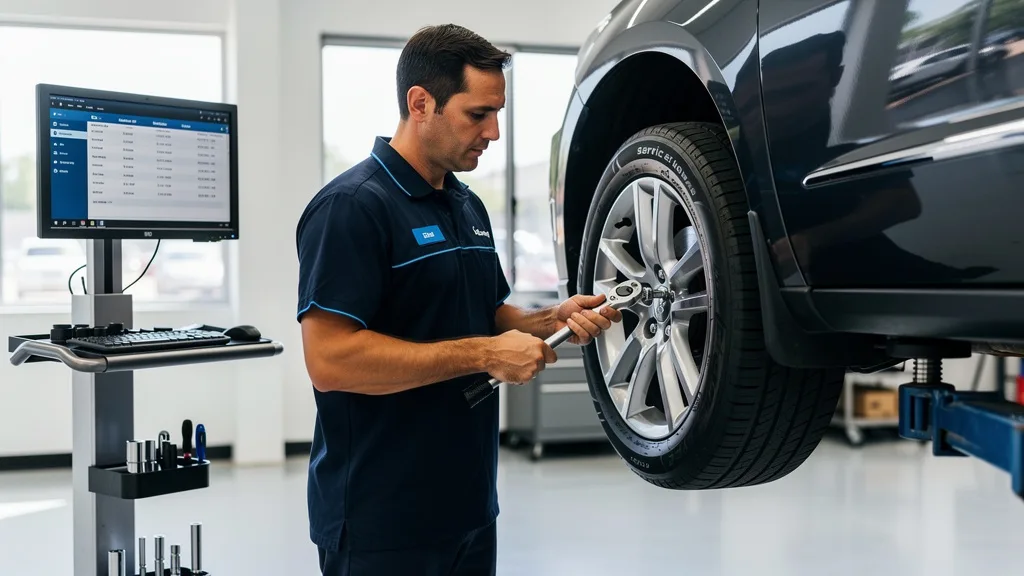
Furthermore, professional mechanics understand the unique challenges the Darwin climate presents, such as high heat and humidity, which can accelerate wear on brake components. They can recommend parts and service schedules best suited for local conditions, ensuring your brakes perform reliably when you need them most.
Benefits of Using Trusted Mechanics
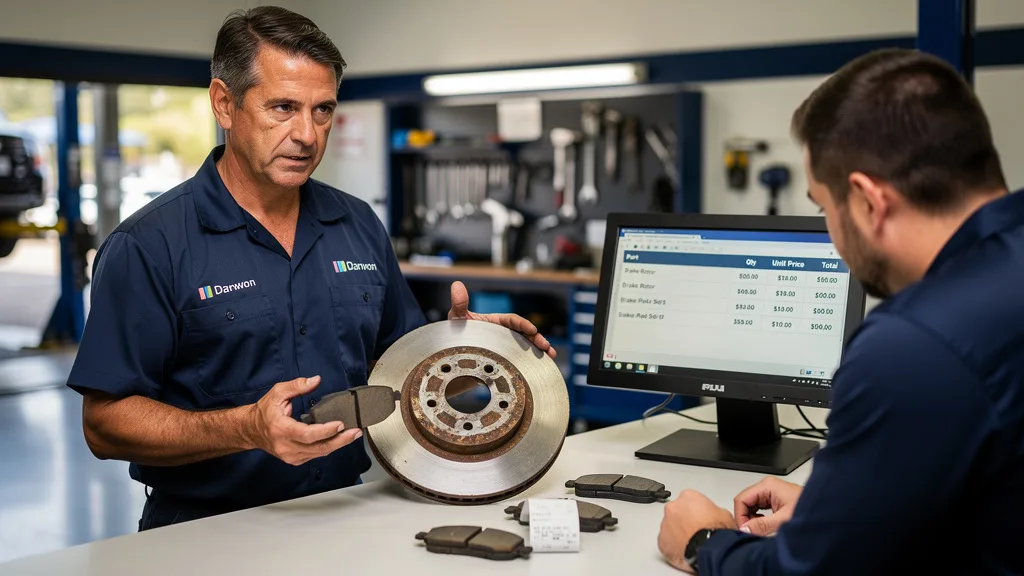
The primary benefit of using trusted mechanics is the assurance of quality and safety. Professionals are trained to spot issues that a DIYer might miss, such as worn brake hoses, a failing master cylinder, or uneven rotor wear that indicates a deeper problem. Their experience allows them to diagnose the root cause of a brake issue, not just treat the symptom by replacing the pads.
Using a professional also saves you significant time and hassle. Instead of spending hours in your garage, you can drop your car off and have it returned with the brakes expertly serviced. Many workshops offer additional conveniences like courtesy cars or are located in accessible areas. For those with busy schedules, the convenience of professional auto repair and mechanic services is a major advantage.
Workmanship Guarantees and Part Warranties
When a professional workshop services your brakes, the work is typically backed by a workmanship guarantee. This means that if any issues arise due to the installation or service, the shop will rectify the problem at no additional cost. This provides a crucial safety net that is completely absent from a DIY repair.
Additionally, the parts used by reputable shops come with a manufacturer's warranty. If a brake pad or rotor fails prematurely due to a defect, it will be replaced under warranty. This protection against faulty parts is a significant advantage, as it saves you the cost and labor of redoing the job and ensures your vehicle is fitted with reliable components.
DIY vs Professional Brake Repair: A Head-to-Head Comparison
Choosing between a DIY project and a professional service involves a direct comparison of several key factors. While cost is often the primary motivator for a DIY attempt, it's essential to consider time, quality, and, most importantly, safety. For Darwin drivers, this decision impacts not only your wallet but your peace of mind on the road.
| Factor | DIY Brake Repair | Professional Service in Darwin |
|---|---|---|
| Cost | Lower upfront cost (parts only, plus tool investment). | Higher upfront cost (parts + labor). |
| Time | Significant time investment (4+ hours for novices). | Minimal personal time (drop-off and pick-up). |
| Quality & Parts | Variable, depends on parts chosen and skill level. | High-quality, often OEM-spec parts with warranty. |
| Safety & Liability | All risk and liability fall on you. Errors can be catastrophic. | Work is guaranteed, and the workshop carries liability. |
| Tools & Equipment | Requires significant investment in specialized tools. | No tool investment needed; professionals have everything. |
| Guarantee | None. If you make a mistake, you bear the full cost. | Workmanship guarantees and parts warranties included. |
Cost Analysis: Upfront Savings vs Long-Term Value
The most apparent advantage of DIY brake repair is the potential for cost savings. By eliminating labor charges, you only pay for the parts. However, this calculation often overlooks the initial investment in proper tools, which can run into hundreds of dollars. If you use the wrong tools or buy cheap, low-quality parts to save more money, you could cause further damage, leading to much more expensive repairs down the line.
A professional service has a higher upfront cost but offers greater long-term value. The use of high-quality parts, expert installation, and workmanship guarantees means the job is done right the first time. This prevents premature wear and avoids the cost of redoing a failed DIY job, ultimately providing a safer and more cost-effective solution over the life of your vehicle.
Time and Convenience Factors for Darwin Drivers
Your time is valuable. A DIY brake job can consume an entire weekend, which could be spent with family or on other activities. You also have to factor in the time spent researching procedures, purchasing parts, and potentially making multiple trips to the auto parts store. It can be a frustrating and time-consuming process, especially if you encounter unexpected issues.
In contrast, a professional service is incredibly convenient. You can schedule an appointment, drop off your car, and let the experts handle it. Many modern workshops, including mobile services, are designed for customer convenience. For instance, a mobile mechanic in Darwin can even perform the service at your home or workplace, offering maximum flexibility for your busy schedule.
Quality of Parts and Overall Workmanship
The quality of brake parts can vary dramatically. While auto parts stores offer a range of options, it can be difficult for a consumer to distinguish between high-quality components and inferior alternatives. Professionals have established supply chains and use parts that meet or exceed Original Equipment Manufacturer (OEM) specifications, ensuring optimal performance and longevity.
Workmanship is the other half of the equation. A trained mechanic performs brake services daily and has a refined process for ensuring every bolt is torqued correctly, all surfaces are clean, and the system is functioning perfectly. This level of precision and attention to detail is difficult to replicate in a home garage and is critical for the safe operation of your brakes.
Safety, Liability, and Your Peace of Mind
This is the most critical point of comparison. Your vehicle's braking system is its most important safety feature. A mistake during a DIY repair, such as trapping air in the brake lines or failing to properly secure a caliper, can lead to complete brake failure. The consequences of such a failure can be devastating.
"When it comes to your brakes, there is no room for error. The peace of mind that comes from knowing a certified professional has ensured your vehicle can stop safely is priceless. It's an investment in the safety of yourself, your passengers, and everyone else on the road."
If your DIY repair fails and causes an accident, you are solely liable for the damages. In contrast, a professional workshop carries insurance and guarantees its work. This professional accountability provides a crucial layer of protection and ensures that the job is performed to the highest safety standards.
Common DIY Brake Repair Mistakes to Avoid
Even with the best intentions, it's easy for home mechanics to make critical errors during a brake repair. These common brake repair mistakes can compromise your safety and lead to more costly repairs. Understanding these pitfalls is essential if you are still considering the DIY route.
The Risk of Using Low-Quality Parts
One of the most frequent mistakes is choosing the cheapest available parts. Using low-quality parts is a false economy. Inferior brake pads can wear out quickly, create excessive dust, and offer poor stopping power, especially in Darwin's demanding heat. Cheap rotors can warp easily, causing steering wheel vibrations when you brake.
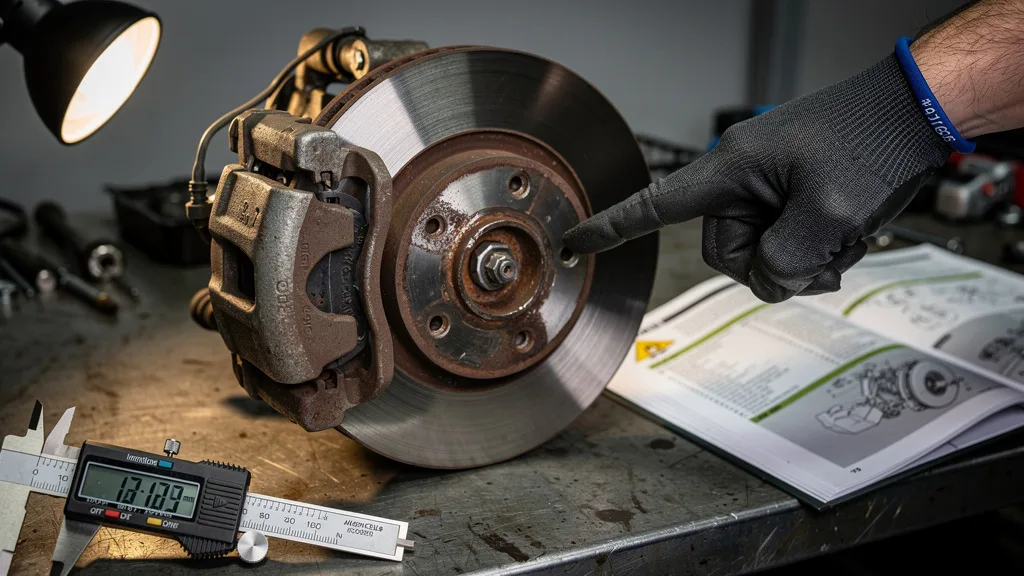
These parts may not meet Australian safety standards, putting you at risk. Reputable mechanics source components from trusted manufacturers that are designed for performance and durability. For your safety, it's vital to use parts that comply with regulations, a point emphasized by bodies like the ACCC which oversees safety standards for car parts in Australia.
Incorrect Installation and Adjustment Errors
Proper installation is more than just swapping old parts for new ones. Common errors include failing to clean and lubricate caliper slide pins, which can cause the brakes to bind and wear unevenly. Another dangerous mistake is not tightening bolts to the correct torque specification, which can cause components to loosen over time.
Forgetting to bed-in new brakes is another oversight. This process involves a series of controlled stops to properly mate the new pads with the rotors, ensuring optimal friction and performance. Skipping this step can result in reduced braking effectiveness and glazed pads, diminishing the value of your new parts.
Overlooking Related Brake System Components
A brake job isn't just about pads and rotors. A DIYer focused solely on these parts may overlook other critical components. A professional inspection includes checking the brake fluid level and condition, examining brake lines for cracks or leaks, and ensuring the calipers are functioning correctly.
A spongy brake pedal, for instance, could indicate air in the hydraulic lines or a failing master cylinder, not just worn pads. Simply replacing the pads without addressing the root cause is a temporary fix at best and dangerous at worst. A holistic inspection is a standard part of professional service but is often missed at home.
Warning Signs Your Brakes Need Immediate Attention
Your car will usually provide clear warning signs when the brakes require service. Ignoring these can lead to more extensive damage and unsafe driving conditions. If you notice any of the following symptoms, it's crucial to have your brakes inspected immediately.
- Squealing or Grinding Noises: A high-pitched squeal often indicates the brake pads are worn thin. A metallic grinding sound means the pads are completely gone, and metal is grinding against metal, which can quickly destroy your rotors.
- Spongy or Soft Brake Pedal: If your brake pedal feels softer than usual or goes closer to the floor, it could signal air in the brake lines or a problem with the master cylinder.
- Vehicle Pulling to One Side: When you brake, if the car pulls to the left or right, it may indicate a stuck caliper or uneven wear on the brake components.
- Vibrations or Pulsating: A vibrating steering wheel or pulsating brake pedal when you brake is a common symptom of warped rotors.
- Brake Warning Light: If the brake warning light on your dashboard illuminates, it indicates a problem detected by your car's onboard diagnostics system that requires immediate professional attention.
Making the Right Choice for Your Car's Safety
Ultimately, the decision between DIY and professional brake service comes down to an honest assessment of your skills, tools, and the value you place on safety and peace of mind. While there are limited scenarios where a DIY approach could work, the risks often outweigh the benefits for the average car owner.
When DIY Brake Repair Might Be an Option
A DIY brake repair might be a viable option if you meet all of the following criteria: you have significant mechanical experience, you own a comprehensive set of high-quality tools (including a torque wrench), you have a service manual for your specific vehicle, and you are working on an older, simpler vehicle without complex electronic systems. Even then, it should only be attempted if you are 100% confident in your ability to complete the job perfectly.
It is also crucial that you are prepared to accept all the risks involved. If something goes wrong, you have no one to turn to and are fully responsible for any further repairs or, in the worst-case scenario, any accidents that may result. This is a heavy burden to carry for the sake of saving on labor costs.
When You Should Always Call a Professional
For the vast majority of drivers, calling a professional is the right choice. You should always opt for a professional if you have a modern vehicle with an Anti-lock Braking System (ABS), electronic stability control, or an electronic parking brake. These systems require specialized tools and knowledge for service.
If you lack the proper tools, experience, or a safe space to work, a professional service is non-negotiable. Most importantly, if the vehicle is your primary mode of transport for your family, the safety assurance provided by a certified mechanic is essential. Ensuring your vehicle meets all roadworthiness standards, as outlined by NT authorities for vehicle compliance and inspections, is best left to the experts.
Key Takeaways
Navigating the choice between DIY and professional brake repair in Darwin requires a clear understanding of the trade-offs. Here is a summary of the most important points to consider for your vehicle's safety and performance in 2026.
- Safety First: Brake repair is a safety-critical task. Errors can lead to catastrophic failure. Professional service provides guaranteed workmanship and peace of mind.
- Cost vs. Value: DIY offers upfront savings on labor, but professional service provides long-term value through quality parts, warranties, and preventing costly mistakes.
- Tools and Expertise: A successful DIY job requires a significant investment in specialized tools and a high level of mechanical knowledge. Professionals already have both.
- Time and Convenience: Professional service saves you hours of work and frustration. Mobile mechanic options in Darwin add another layer of convenience.
- Comprehensive Inspection: Mechanics inspect the entire brake system, catching related issues a DIYer might miss, which is crucial for overall vehicle health.
Frequently Asked Questions
How much does a professional brake service cost in Darwin?
The cost of a professional brake service in Darwin can vary depending on your vehicle's make and model, and whether you need just pads or pads and rotors. On average, you can expect to pay between $250 and $500 per axle for a standard passenger vehicle. It's always best to request a detailed quote from a reputable workshop before committing to the service.
This price includes high-quality parts and the labor of a certified mechanic, as well as a warranty on both. While it's more than the cost of DIY parts, it reflects the expertise, safety, and guarantees that come with professional work.
How often should I get my car's brakes inspected?
It is generally recommended to have your brakes inspected at least once a year or every 15,000 to 20,000 kilometers. However, driving conditions in Darwin can be harsh, so more frequent checks may be necessary. A good practice is to have them checked with every regular car service.
If you notice any warning signs such as squealing noises, a soft brake pedal, or vibrations, you should have your brakes inspected immediately, regardless of when they were last checked. Proactive inspections are key to preventing major failures.
Can I use any brand of brake pads for my vehicle?
No, it's important to use brake pads that are specifically designed for your vehicle's make, model, and year. Different vehicles have different requirements for friction material, size, and heat dissipation. Using the wrong pads can lead to poor braking performance, excessive noise, and accelerated wear on your rotors.
Reputable mechanics will use pads that meet or exceed OEM specifications. If you are doing a DIY repair, ensure you purchase the correct parts from a trusted supplier by providing your vehicle's exact details.
What is the difference between brake pads and rotors?
Brake pads and brake rotors are two distinct but essential components of your car's disc brake system. The brake pads are blocks of friction material that press against the rotors. The brake rotors (or discs) are the large metal discs that the wheels are attached to.
When you press the brake pedal, the brake calipers squeeze the pads against the spinning rotors, creating friction that slows and stops the vehicle. The pads are designed to wear down over time and are the most frequently replaced component, while rotors are thicker and last longer but also require replacement when they become too thin or warped.
Is it legal to do your own brake repairs in Australia?
Yes, it is generally legal for you to perform repairs on your own vehicle in Australia, including brake repairs, provided the vehicle remains roadworthy. However, the critical point is that you are legally responsible for ensuring the vehicle is safe to operate on public roads after the repair.
If your DIY brake repair fails and causes an accident, you could be held liable. This is a significant reason why many people choose a licensed professional, as it transfers the responsibility for the quality and safety of the work to the workshop.
Conclusion
For drivers in Darwin, the decision between DIY and professional brake repair hinges on prioritizing safety and long-term reliability over short-term savings. While the hands-on approach of a DIY project can be satisfying for a skilled enthusiast, the risks associated with this critical safety system are substantial. In 2026, with vehicles becoming increasingly complex, the expertise, specialized tools, and guaranteed workmanship of a professional mechanic offer unmatched value and peace of mind.
Don't compromise on the safety of your vehicle. If you're experiencing any brake issues or are due for an inspection, our team of trusted mechanics is here to provide expert service you can rely on. Ensure your car is ready for anything the roads have to offer. Book a Service today for a comprehensive brake inspection and professional care.
Written by MechanicDarwin Technical Team
MechanicDarwin Trade-Qualified Technician
Trade-qualified technician at MechanicDarwin with extensive experience diagnosing and repairing vehicles under extreme Northern Territory conditions.