
Diagnosing a Diesel Engine That Won't Start in Darwin
Stuck with a diesel that won't start in Darwin? Learn how to diagnose the issue with our 2026 guide on fuel, air, and electrical problems. Call us for help.
MechanicDarwin Technical Team
MechanicDarwin Certified Technician

Is there anything more frustrating than turning the key in your diesel vehicle and getting nothing but silence or a weak crank? When your 4WD, ute, or work truck won't start, it can bring your entire day in Darwin to a standstill. Understanding the potential causes is the first step toward getting back on the road.
To diagnose a diesel engine that won't start, you must check three core systems: fuel, air/compression, and electrical. Start by verifying you have fuel and that the battery is charged. Then, inspect for clogged fuel and air filters. Finally, check the glow plug system, as it is essential for cold starting a diesel. If these basic checks don't solve it, the problem may be more complex, involving sensors or the fuel injection system.
Initial Checks for a Diesel Engine That Won't Start
Before diving into complex diagnostics, it's crucial to cover the basics. Often, a simple oversight is the root cause of a no-start situation. These initial checks take only a few minutes and can save you a lot of time and unnecessary stress. Don't assume the worst until you have ruled out these common and easily fixable issues.
Confirm Basic Settings and Look for Obvious Issues
First, ensure your vehicle is in Park (P) or Neutral (N) if it has an automatic transmission, or that the clutch is fully depressed for a manual. Modern vehicles have safety switches that prevent the engine from starting if it's in gear. Next, check your fuel gauge. It might seem obvious, but running out of diesel is a frequent reason for a no-start, and diesel systems can be difficult to restart once they've run dry as air gets into the fuel lines.
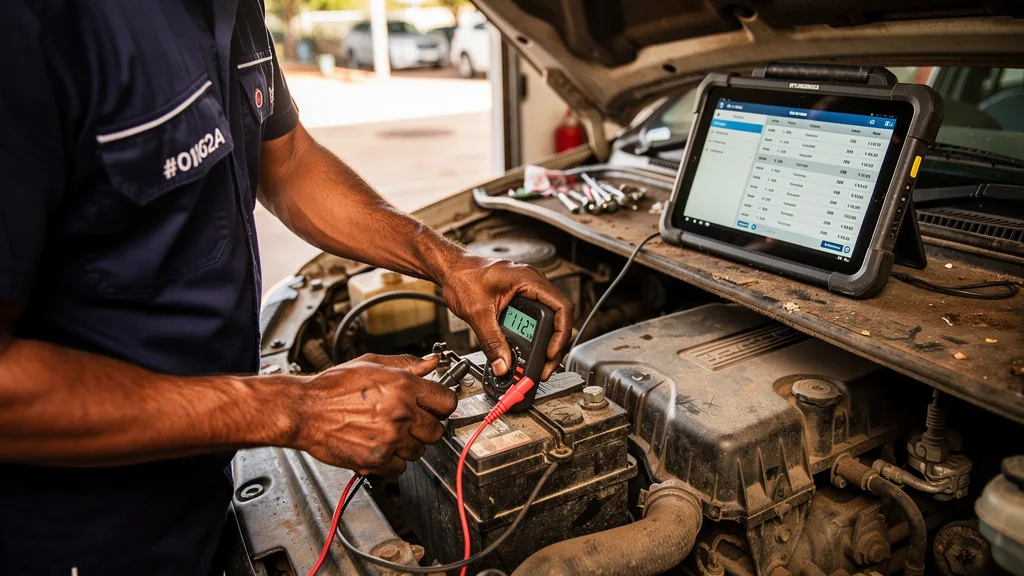
After confirming the basics, take a quick look under the bonnet and around the vehicle. Do you see any puddles on the ground that could indicate a fuel leak? Are there any visibly disconnected wires or hoses? A quick visual inspection can sometimes point you directly to the source of the problem without needing any tools.
Listen Carefully When You Turn the Key
The sound your vehicle makes, or doesn't make, when you turn the key is a major diagnostic clue. Pay close attention and try to identify what you hear. Is there a single, solid click? This often points to a faulty starter motor or a bad connection to it. Do you hear a rapid series of clicks? That is a classic sign of a dead or very low battery that doesn't have enough power to turn the engine over.
If the engine cranks over but does so very slowly, your battery may be weak or you could have a problem with the starter or battery cables. If the engine cranks at a normal speed but just won't fire up and run, the issue is more likely with the fuel, air, or glow plug systems. No sound at all could mean a completely dead battery, a faulty ignition switch, or a failed neutral safety switch.
The Three Core Reasons a Diesel Engine Fails to Start
Unlike petrol engines that use spark plugs, diesel engines rely on compression to ignite the fuel. This fundamental difference means the diagnostic process focuses on three key areas: the fuel system, the air and compression system, and the electrical components that support combustion, like glow plugs and the starter.
Lack of Fuel or Fuel System Problems
A diesel engine needs a precise, high-pressure supply of clean fuel to run. The most common issue is simply an empty tank. However, if you have fuel, the problem could lie elsewhere in the system. A clogged fuel filter is a major culprit, preventing diesel from reaching the engine. Water contamination is another significant problem, especially in Darwin's humid climate, as it can damage injectors and the high-pressure pump.
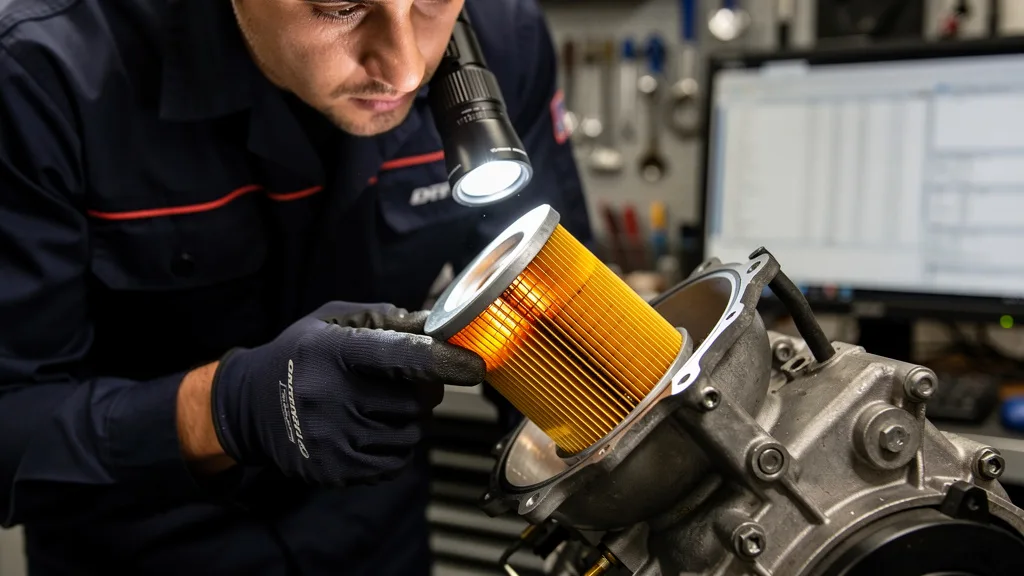
Other potential failures include a weak or dead lift pump (which moves fuel from the tank to the injection pump) or air getting into the fuel lines, which disrupts the high pressure needed for injection. Finally, a malfunctioning fuel injection pump or failed injectors can prevent fuel from being delivered to the cylinders correctly, making a start impossible.
Insufficient Air or Compression
For combustion to occur, a diesel engine must draw in a large volume of air and compress it until it becomes hot enough to ignite the injected fuel. A severely clogged air filter can starve the engine of the oxygen it needs to start and run. This is a simple component to check and replace and should be part of your regular maintenance, especially with the dusty conditions we can experience in the NT.
Low compression is a more serious issue. This means air is escaping from the cylinder during the compression stroke, so it never gets hot enough for ignition. This can be caused by internal engine wear, such as worn piston rings, damaged cylinder walls, or a problem with the valves. Diagnosing low compression requires specialized tools and is a job best left for a professional mechanic.
Electrical System and Glow Plug Failures
While diesels don't have spark plugs, their electrical system is still vital for starting. The battery must be strong enough to spin the heavy diesel engine over at a sufficient speed. A weak battery is one of the most common reasons for a no-start. Beyond the battery, the starter motor itself can fail, or the connections between the battery and starter can become corroded and loose, which is a common issue we see in Darwin's corrosive, salty air.
Glow plugs are another critical electrical component. These are small heating elements inside each cylinder that warm the combustion chamber before a cold start. If the glow plugs or their control module fails, the engine won't be able to generate enough heat to ignite the fuel, especially on a cooler morning. Most modern diesels have a 'wait to start' light on the dash; if this doesn't come on or goes out immediately, it could indicate a glow plug problem.
A Step-by-Step Diesel No-Start Diagnosis Guide for 2026
If you're facing a no-start situation, a methodical approach can help you pinpoint the issue. This guide walks you through the logical steps to take, from the simplest checks to more involved inspections. Always prioritize safety: ensure the vehicle is in park with the handbrake on, and if you're not comfortable with any step, it's always best to call a professional.
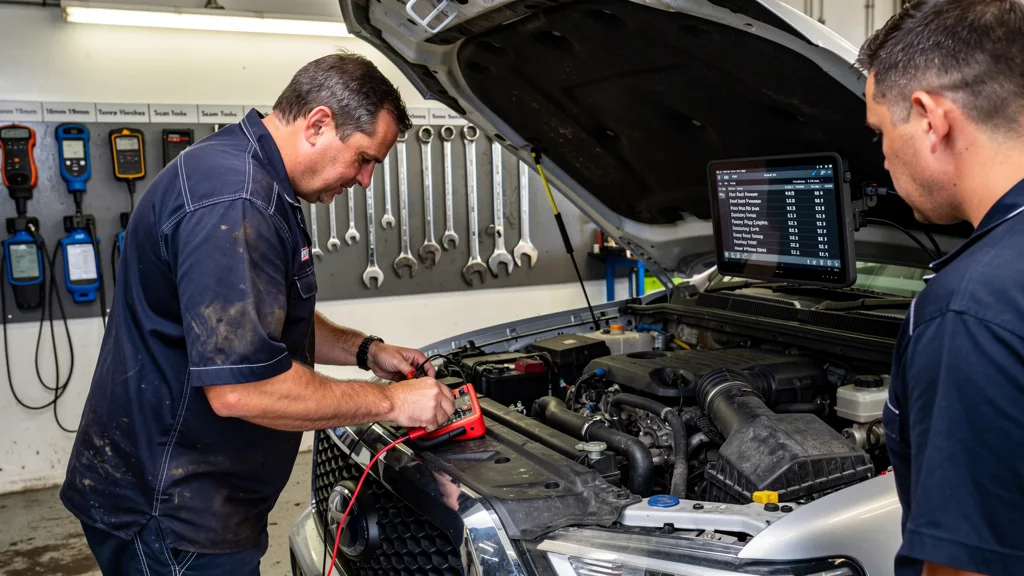
This diagnostic process is designed to rule out the most common failures first. For many of these steps, you will only need basic hand tools. Remember that modern diesel engines are complex, and some issues can only be diagnosed with advanced electronic scan tools. For more complex problems, watching a video on how a Diesel won't start can provide useful visual cues.
| Step | Diagnostic Action | Common Causes | Tools Needed |
|---|---|---|---|
| 1. Electrical | Check battery voltage and listen to the starter. | Dead battery, loose terminals, failed starter. | Multimeter, wrench set. |
| 2. Fuel | Check fuel level, inspect fuel filter, and prime system if needed. | No fuel, clogged filter, air in lines. | Filter wrench, hand primer pump. |
| 3. Air | Inspect the air filter element. | Severely clogged air filter. | Screwdriver or socket set. |
| 4. Glow Plugs | Watch the 'wait to start' light on the dashboard. | Failed glow plugs or control module. | None (initially). |
Step 1: Test Your Battery and Electrical Connections
Your first step is to confirm your battery has enough charge. A healthy, fully charged car battery should read around 12.6 volts with the engine off. You can test this with a simple multimeter. If the voltage is below 12.2 volts, the battery is low and may not have enough power to start the engine. Try charging it or jump-starting the vehicle.
While you're at the battery, inspect the terminals for corrosion, which appears as a white or greenish powder. This buildup can prevent a good electrical connection. Disconnect the terminals (negative first) and clean them thoroughly with a wire brush. Reconnect them securely (positive first) and try starting the engine again. A solid connection is vital for delivering the high current a diesel starter needs.
Step 2: Inspect the Fuel System from Tank to Engine
If the battery is good and the engine is cranking normally, the next stop is the fuel system. Locate your diesel fuel filter; its location varies by vehicle, so consult your owner's manual if needed. Many have a water drain at the bottom. It's good practice to drain any collected water, but a better step is to replace the filter if you don't know its age. A clogged filter is a very common cause for a how to diagnose a diesel engine that won't start in Darwin scenario.
If you've run out of fuel or replaced the filter, you may need to prime the system to remove air from the lines. Most diesel vehicles have a small, manual hand pump on or near the fuel filter housing. Pump this until it becomes firm. This action pushes fuel through the system, purging the air. Once primed, try starting the engine again. It may take a few cranking cycles to fire up.
Step 3: Check the Air Filter and Glow Plug Operation
The air intake system is the next easiest thing to check. Locate the air filter box, open it, and inspect the filter element. If it's black with dirt and debris, it's likely restricting airflow and needs to be replaced. While a dirty filter alone might not prevent a start unless it's completely blocked, it can contribute to hard starting and poor performance.
Next, check your glow plug system's basic function. Turn the ignition to the 'on' position without starting the engine. Watch the dashboard for a small light that looks like a coiled wire. This is the glow plug indicator. It should stay on for a few seconds and then turn off, indicating that the glow plugs have heated up and you can now start the engine. If this light doesn't come on at all, or flashes, it signals a fault in the system that requires professional diagnosis and likely an auto electrical repair.
What to Do if Your Engine Cranks But Won't Start
One of the most common diagnostic puzzles is when the engine turns over at a normal speed but refuses to catch and run. This tells you that the battery and starter motor are likely working correctly, allowing you to focus your attention on the other two elements of diesel combustion: fuel and compression. This scenario often points to a fuel delivery issue or a problem with an engine sensor.
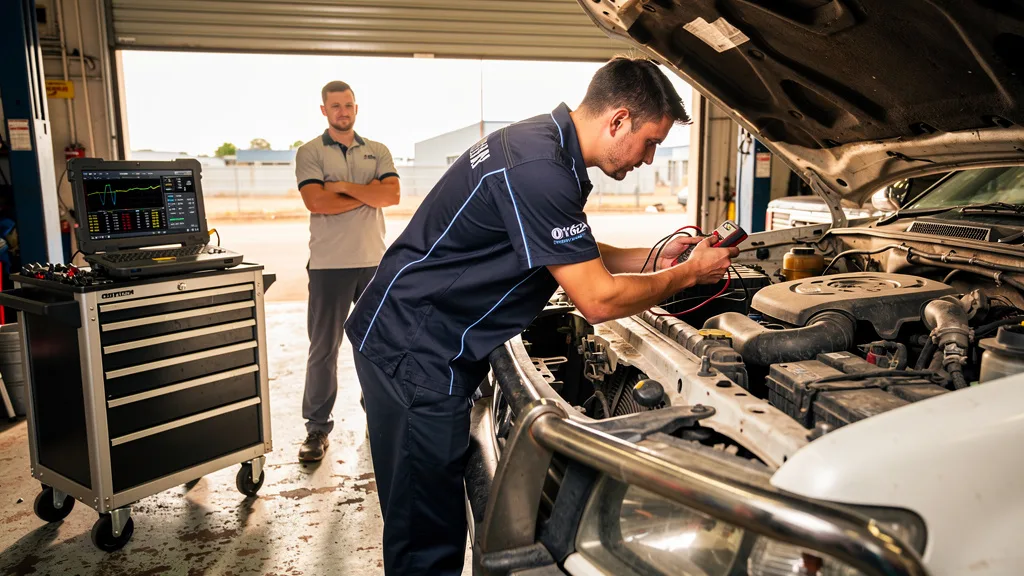
When this happens, it's important not to crank the engine excessively, as this can drain the battery and potentially damage the starter motor. After a couple of 10-15 second attempts, it's time to pause and investigate further. Continuing to crank a non-starting engine rarely solves the problem and can create new ones.
Investigating Fuel Delivery and Contamination
If the engine is cranking but not firing, your primary suspect should be fuel. Did you recently fill up at a different service station? Poor quality or contaminated fuel can cause a no-start. Water in the fuel is a major issue; you can check for this by draining a small sample from the water separator on your fuel filter into a clear jar. If you see a distinct layer of water at the bottom, your fuel system needs to be drained and flushed.
You can also check if fuel is reaching the engine. A simple way is to slightly loosen a fuel line at one of the injectors (be careful, as this is a high-pressure system) and have someone crank the engine. If you see fuel seeping or spurting out, you know the injection pump is working. If there's no fuel, the problem lies further back in the system, possibly with the fuel pump, filter, or a blockage in the lines. This can be a messy job and involves high-pressure fuel, so it's often best left to a professional from our mobile mechanic Darwin NT team.
Ruling Out Sensor or Computer Malfunctions
Modern diesel engines are heavily reliant on electronic sensors and a central computer (ECU) to manage the engine. A failure in one of these critical sensors can prevent the engine from starting, even if the mechanical components are all in working order. The crankshaft position sensor and camshaft position sensor are two of the most important ones, as they tell the ECU the engine's speed and position so it knows when to inject fuel.
If one of these sensors fails, the ECU won't receive a signal and will not command the injectors to fire. Unfortunately, diagnosing a faulty sensor is nearly impossible without a specialized OBD-II scan tool that can read live data and fault codes from the vehicle's computer. If you've checked all the basic fuel and air systems and are still stuck, it's highly likely you're dealing with an electronic issue that needs an expert touch.
When to Call an Experienced Diesel Mechanic in Darwin
While basic DIY diagnostics can solve many common problems, there comes a point where specialized knowledge and tools are necessary. Continuing to troubleshoot without the right equipment can lead to further damage or wasted money on parts you don't need. Knowing when to hand the keys over to a professional is key to a fast and cost-effective repair.
If you've worked through the basic steps and your diesel still won't start, or if you encounter a problem that seems beyond your skill level, it's time to call for help. Complex electrical issues, internal engine problems, or fuel injection system faults require an Experienced Diesel Mechanic in Darwin who has the diagnostic technology to pinpoint the exact cause.
"In 2026, modern diesels are more complex than ever. While a clogged filter is still a common issue, we're seeing more no-start problems caused by failed sensors or ECU faults. Without the right scan tool, you're just guessing. That's why knowing how to diagnose a diesel engine that won't start often means knowing when to call a licensed professional."
Signs You Need Professional Auto Electrical Repair
If you suspect an electrical fault beyond a simple battery issue, it's wise to seek professional help. Symptoms like a flashing glow plug light, a 'check engine' light that stays on, or no power to the ignition system at all point to problems within the wiring harness, fuse boxes, or the ECU itself. Trying to fix these issues without a proper wiring diagram and diagnostic tools can cause short circuits and damage expensive electronic modules.
Our technicians are trained in complex auto electrical repair services and can efficiently trace faults in your vehicle's systems. From a faulty ignition switch to a failed engine sensor, we have the equipment to diagnose the problem correctly the first time. This saves you from the guesswork and potential for creating bigger problems.
Complex Issues Requiring Specialized Tools
Some diagnostic procedures are simply not feasible for the average vehicle owner. For example, testing for low engine compression requires a special compression tester gauge that screws into the glow plug or injector hole. Testing the fuel pressure from a common-rail high-pressure pump requires specific gauges that can handle pressures exceeding 20,000 PSI.
Similarly, diagnosing faulty fuel injectors or a failing injection pump is a complex task. These are jobs for a qualified technician with the right training and tools. If your initial diagnosis points towards a serious mechanical or high-pressure fuel system issue, your next step should be to contact a reputable workshop. Regular maintenance, such as getting a car servicing in Darwin, can help prevent many of these major failures.
Key Takeaways
When your diesel vehicle won't start, a structured approach is your best tool. Remember these key points to guide your diagnosis and get you back on the road sooner.
- The Diesel Triangle: A diesel engine needs three things to start: clean fuel, sufficient air and compression, and heat (from glow plugs and compression). Your diagnosis should focus on these three areas.
- Start Simple: Always check the basics first. Ensure you have fuel in the tank, the vehicle is in Park or Neutral, and the battery terminals are clean and tight.
- Listen to the Clues: The sound the engine makes when you turn the key (or the lack of sound) is a powerful diagnostic clue pointing toward the battery, starter, or other systems.
- Cranking vs. Not Cranking: If the engine doesn't crank, the problem is likely electrical (battery, starter). If it cranks but won't start, the problem is likely fuel or air-related.
- Know Your Limits: While you can diagnose and fix many common issues like a dead battery or clogged filter, complex fuel injection and electronic sensor problems are best left to a professional with the right tools.
Frequently Asked Questions
How do you fix a diesel engine that won't start?
To fix a diesel that won't start, you must first diagnose the cause. Start by checking the battery, fuel level, and fuel filter. Ensure the glow plugs are working by checking the dashboard indicator light. If these basics are fine, the issue could be more complex, like a failed fuel pump, clogged injectors, or a faulty sensor, which typically requires professional repair.
How much does it cost to get a no-start diagnosis in Darwin?
The cost for a no-start diagnosis in Darwin can vary. Most workshops, including ours, will charge an initial diagnostic fee, which typically covers the first hour of labour. This is often enough time to identify the root cause of common issues. If the problem is complex and requires more in-depth testing, the cost can increase. We always provide an upfront quote before proceeding with any repairs.
Can Darwin's climate affect a diesel engine's ability to start?
Yes, Darwin's climate can definitely play a role. The high humidity can accelerate water contamination in fuel tanks if they are not kept full. The heat and humidity can also speed up battery degradation and corrosion on electrical terminals. Following a proper maintenance schedule, like the one we outline for preparing for the wet season in Darwin, is crucial.
Is a diesel no-start always an expensive repair?
Not at all. Many no-start situations are caused by simple, inexpensive issues. A dead battery, a clogged fuel filter, loose electrical connections, or even just running out of fuel are all common and relatively cheap to fix. The repair only becomes expensive when the cause is a major component failure, such as the high-pressure fuel pump or internal engine damage.
What tools are needed for a basic diesel diagnosis?
For a basic diagnosis, you'll need a few essential tools. A multimeter is crucial for testing battery voltage. A set of wrenches and sockets is needed for checking and cleaning battery terminals. A fuel filter wrench will be required to replace the filter, and a flashlight is always helpful for visual inspections. For anything more advanced, specialized diagnostic equipment is usually necessary.
Conclusion
Successfully figuring out how to diagnose a diesel engine that won't start in Darwin comes down to a logical process of elimination. By checking the core requirements of fuel, air, and electrical power, you can often identify and even fix the most common culprits yourself. However, it's equally important to recognize when a problem requires the specialized tools and expertise of a licensed mechanic to avoid causing further damage.
If you've tried the basics and are still stuck, or if you'd rather have an expert handle it from the start, our team at MechanicDarwin is here to help. Our qualified technicians have the experience and diagnostic equipment to find the fault quickly and get your diesel running smoothly again. Don't let a no-start ruin your day. Book a Service online and let our mobile or workshop team take care of it for you.
Written by MechanicDarwin Technical Team
MechanicDarwin Trade-Qualified Technician
Trade-qualified technician at MechanicDarwin with extensive experience diagnosing and repairing vehicles under extreme Northern Territory conditions.