
How to Diagnose Brake Noises in Darwin: A 2026 Guide
Hearing squealing or grinding? Learn how to diagnose brake noises in Darwin with our 2026 guide. Identify sounds and know when to call a professional.
MechanicDarwin Technical Team
MechanicDarwin Certified Technician

Are strange noises from your brakes making you nervous every time you approach a stop sign? Understanding what these sounds mean is the first step toward ensuring your vehicle is safe on Darwin's roads. Diagnosing brake noises involves identifying the specific sound, such as a squeal, grind, or click, and noting when it occurs. This helps pinpoint whether the issue is worn pads, damaged rotors, or other loose components requiring attention from a certified mechanic.
This guide will walk you through the common sounds, simple checks you can perform, and the critical red flags that mean you need professional brake repairs immediately. For car owners in Darwin and Palmerston, paying attention to these auditory clues is essential for both safety and preventing more expensive repairs down the line. Don't ignore what your car is trying to tell you; a quick diagnosis can make all the difference.
Common Brake Noises and What They Mean
Your car's braking system is designed to communicate problems through sound. Different noises point to different issues, ranging from routine maintenance reminders to urgent safety warnings. Learning to distinguish between these sounds is a valuable skill for any driver, especially in the unique driving conditions of the Northern Territory.
High-Pitched Squealing or Squeaking
A high-pitched squeal is one of the most common brake noises and often serves as an early warning sign. Most brake pads are manufactured with a small metal tab called a wear indicator. When your brake pad material wears down to a certain level, this indicator makes contact with the rotor, creating a distinct squealing sound whenever you apply the brakes. This is your car's way of telling you it's time to schedule a pad replacement.
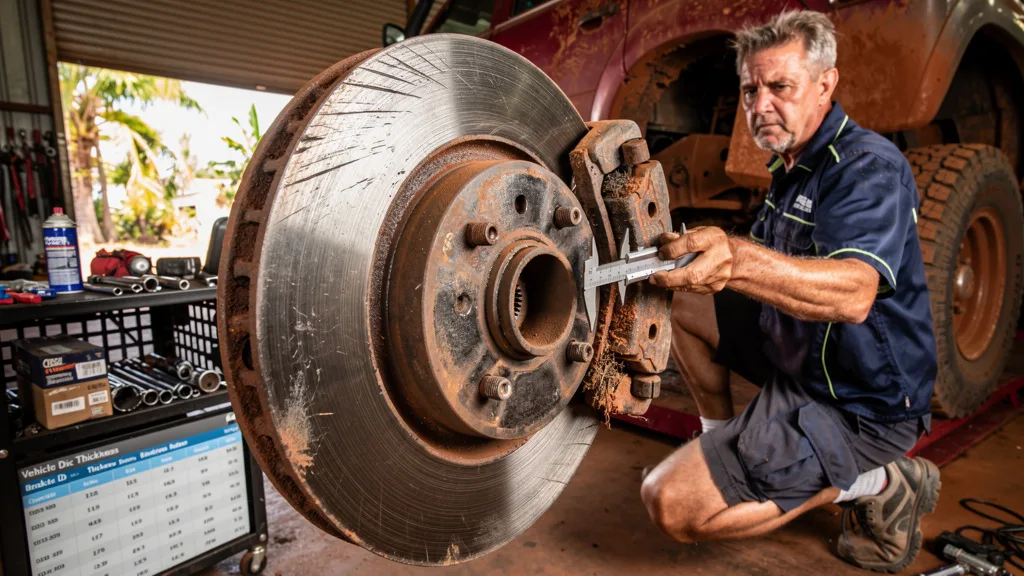
However, squealing doesn't always mean your pads are worn out. Light squeaking can occur in the morning due to moisture and surface rust on the rotors from Darwin's humid air, which usually disappears after a few stops. A persistent squeal, on the other hand, should never be ignored. It's a clear signal to have your braking system inspected by a professional.
Deep Grinding or Scraping Sounds
If you hear a deep, harsh grinding or scraping noise when you press the brake pedal, it is a critical safety alert. This sound almost always indicates that your brake pads have worn down completely. The noise you're hearing is the sound of the metal backing plate of the brake pad grinding against the metal brake rotor. This metal-on-metal contact generates immense heat and friction, severely reducing your stopping power.
Continuing to drive with grinding brakes is extremely dangerous and will cause significant, costly damage to your brake rotors and calipers. If you hear this sound, you should stop driving the vehicle as soon as it is safe to do so and arrange for immediate auto repair & mechanic services. This is not a problem that will fix itself; it requires urgent professional attention.
Clicking, Ticking, or Rattling Noises
Clicking or rattling sounds from your wheels can be unsettling and may point to a few different brake-related issues. A common cause is loose or improperly fitted brake pads shifting within the caliper bracket. You might hear a distinct click when you first apply the brakes and another when you release them or change direction from forward to reverse.
These noises can also be caused by anti-rattle clips or shims that have become worn, broken, or have fallen off. While not as immediately dangerous as a grinding noise, any looseness in the braking system is a cause for concern and can lead to uneven wear and reduced performance. A thorough inspection can pinpoint the source of the rattle and ensure all components are secure.
Initial Safety Checks You Can Perform Yourself
While a comprehensive brake diagnosis should be left to a qualified mechanic, there are a few simple checks you can perform to get a better idea of your brake system's health. Before starting, ensure your car is parked on a level surface and the engine is cool. First, check your brake fluid. Locate the reservoir in the engine bay, which is typically a small, translucent plastic container. The fluid should be between the 'MIN' and 'MAX' lines. If it's low, it could indicate a leak or that your brake pads are very worn.
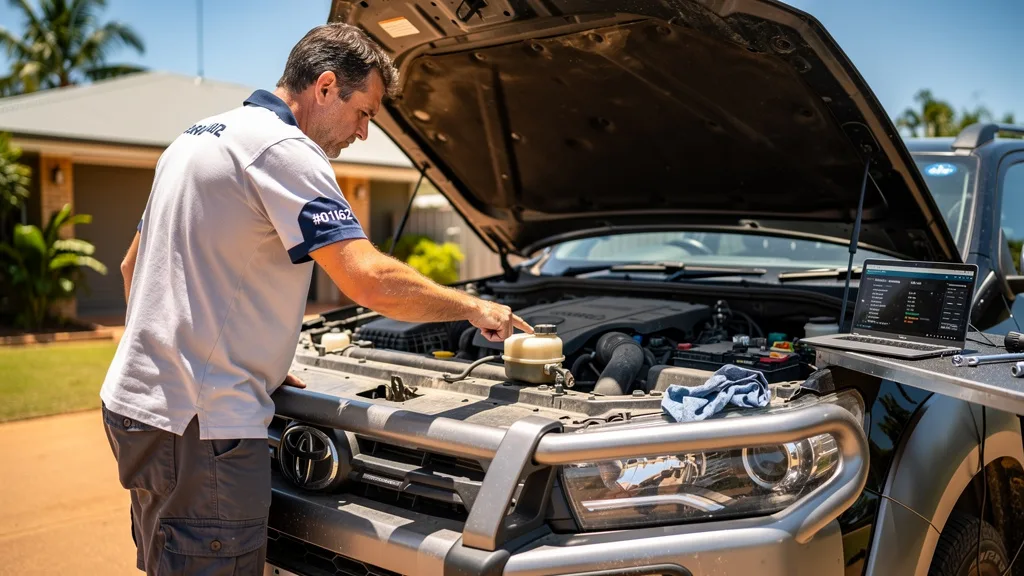
Next, perform a visual inspection of the brakes themselves, if possible. On some cars with open-spoke alloy wheels, you may be able to see the brake caliper and the outer brake pad. Look at the thickness of the pad material. If it appears to be less than 6mm thick, it's likely due for replacement soon. Also, look for any signs of fluid leaks around the wheels or on the inside of your tires. These basic checks can provide valuable clues before you book a professional inspection.
"Listening to your car is key. A squeal is a warning, but a grind is an emergency. In Darwin's climate, regular checks are even more important to catch issues like corrosion or fluid contamination before they become serious safety hazards."
Brake Noise vs. Wheel Bearing Noise: How to Tell the Difference
It's easy to confuse the sound of a failing wheel bearing with a brake problem, as both originate from the same area of the car. However, there are distinct differences that can help you tell them apart. The primary indicator is when the noise occurs. Brake noises are most prominent when you are actively applying the brakes, while a bad wheel bearing typically produces a constant humming, rumbling, or growling noise that changes with vehicle speed.
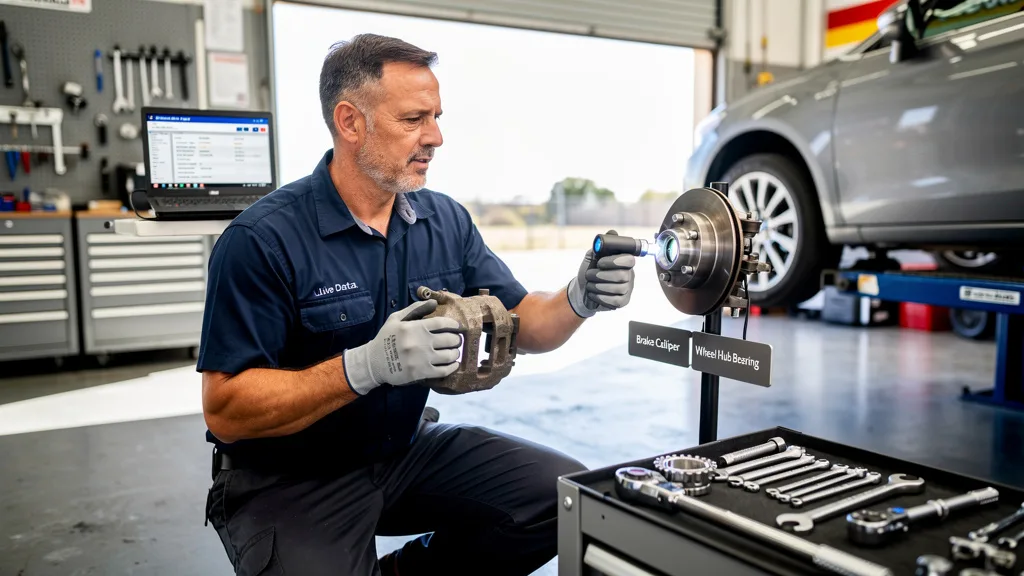
Another key test is to listen for changes while turning. A failing wheel bearing noise will often get louder when you turn the steering wheel to one side, as this puts more load on the bearing. For example, a bad bearing on the front left wheel will usually get louder when you steer to the right. Brake noises, on the other hand, are generally not affected by turning. Understanding this difference can help you provide more accurate information to your mechanic.
| Symptom | Brake Noise | Wheel Bearing Noise |
|---|---|---|
| When it Occurs | Primarily when applying the brake pedal. | Constant hum or growl that changes with speed. |
| Effect of Turning | Generally no change in sound when turning. | Noise often gets louder when turning or changing lanes. |
| Sound Type | Squealing, grinding, clicking. | Humming, rumbling, growling. |
| Common Cause | Worn pads, warped rotors, loose hardware. | Internal wear and lack of lubrication in the bearing. |
Critical Mistakes to Avoid When Diagnosing Brakes
When you're trying to figure out how to diagnose brake noises in Darwin, what you *don't* do is just as important as what you do. Certain popular but misguided 'fixes' can be incredibly dangerous, turning a minor issue into a major safety risk. Avoiding these common mistakes is crucial for your safety and the longevity of your vehicle.
Why You Should Never Spray WD-40 on Your Brakes
It can be tempting to reach for a can of lubricant like WD-40 to silence a squeaky brake, but this is one of the most dangerous things you can do to your car. Brake systems work on the principle of friction. Spraying any oil-based substance onto your brake pads or rotors will contaminate the friction surfaces, drastically reducing their ability to stop the car.
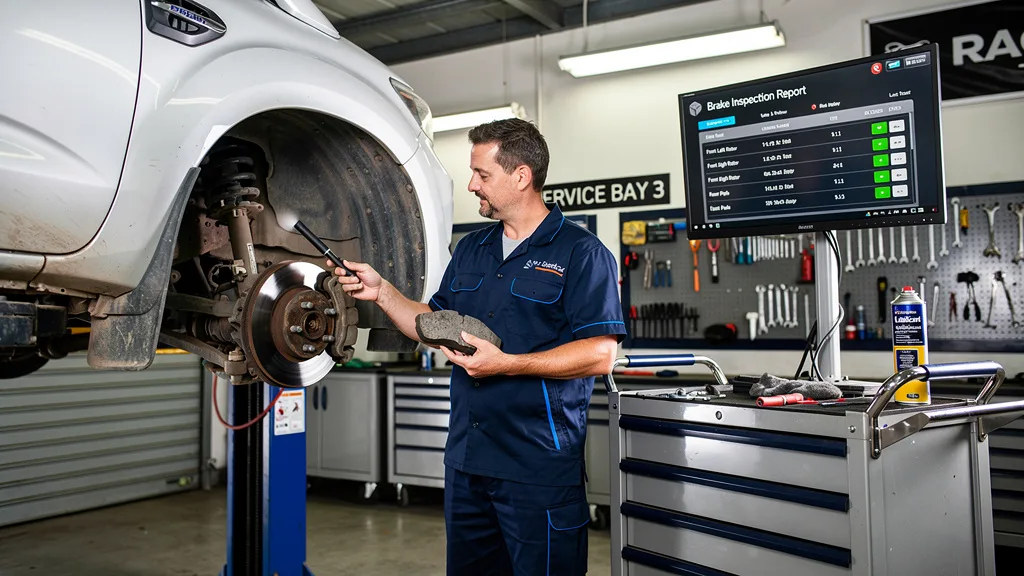
The lubricant soaks into the porous material of the brake pad, making it impossible to clean off. The only solution after contamination is a full replacement of the pads and a thorough cleaning of the rotors. Never apply any form of lubricant to the friction surfaces of your braking system. If your brakes are squeaking, the cause needs to be properly diagnosed and repaired, not silenced with a dangerous temporary fix.
Ignoring Warning Lights on Your Dashboard
Modern vehicles are equipped with sophisticated monitoring systems that alert you to potential problems. If a warning light related to your braking system illuminates on your dashboard, it's a clear signal that something is wrong. The two most common lights are the general brake warning light (often an exclamation point in a circle) and the Anti-lock Braking System (ABS) light.
The general brake light can indicate a few issues, including low brake fluid or an engaged parking brake, but it can also signal a serious hydraulic system failure. The ABS light points to a fault in the anti-lock system, which can affect your control during emergency stops. Ignoring these lights is a significant gamble with your safety. They should be diagnosed by a professional with the proper scanning tools as soon as possible.
When to Immediately Seek Professional Brake Repairs in Darwin
While some car issues can wait, brake problems demand immediate action. Your ability to stop safely is the single most important safety feature of your vehicle. If you experience any of the following red-flag symptoms, it's time to contact a professional mobile mechanic in Darwin or book your car into a workshop without delay.
- Grinding or Scraping Noises: As mentioned, this indicates complete pad wear and is a critical safety failure.
- Spongy or Soft Brake Pedal: If your brake pedal feels mushy or goes closer to the floor than usual, it could signal a loss of hydraulic pressure or air in the brake lines.
- Vehicle Pulling to One Side: When you brake, if your car veers to the left or right, it may be caused by a stuck caliper or a collapsed brake hose.
- Visible Brake Fluid Leaks: Puddles of a clear to brownish fluid under your car, especially near the wheels, are a sign of a dangerous brake fluid leak.
- Persistent Warning Lights: Any illuminated brake or ABS light on your dashboard requires an immediate diagnostic check.
- Vibrations or Pulsating: A shaking steering wheel or pulsating brake pedal often points to warped brake rotors, which can compromise stopping distance.
Key Takeaways
Navigating the sounds your brakes make doesn't have to be a mystery. By understanding the common noises and what they signify, you can take proactive steps to ensure your vehicle remains safe on the road. Here are the essential points to remember from our 2026 guide:
- Listen to the Sounds: High-pitched squeals are a warning, deep grinding is an emergency, and clicking indicates loose parts. Each sound tells a different story about your brake's health.
- Perform Basic Checks: Regularly check your brake fluid level and visually inspect your pads if possible. These simple actions can help you catch problems early.
- Avoid Dangerous 'Fixes': Never spray lubricants like WD-40 on your brake components. This will severely compromise your stopping power and create a major safety hazard.
- Trust the Warning Lights: Your car's dashboard lights are there for a reason. An illuminated brake or ABS light means a professional diagnosis is needed immediately.
- Know When to Call a Pro: Symptoms like a spongy pedal, the car pulling to one side, or any grinding noise are red flags that require immediate attention from a certified mechanic.
Frequently Asked Questions
How much does a brake inspection typically cost in Darwin?
A professional brake inspection in Darwin is a relatively affordable and crucial part of vehicle maintenance. While prices vary between workshops, you can generally expect a comprehensive inspection to cost between $80 and $150. This typically involves removing the wheels to check the condition of pads, rotors, calipers, and brake lines.
Many reputable workshops, including our own, may credit the cost of the inspection towards any necessary repairs you approve. Investing in a proper inspection provides peace of mind and an accurate diagnosis, preventing you from spending money on incorrect or unnecessary parts.
How often should I have my brakes checked?
As a general rule, it's wise to have your brakes professionally inspected at least once a year or every 10,000 to 15,000 kilometers. This can often be done as part of your regular general car servicing. However, driving habits and conditions can significantly impact brake wear.
Given Darwin's stop-start city traffic and the demanding conditions of the region, more frequent checks may be necessary. If you often drive in heavy traffic, tow a trailer, or frequently travel on unsealed roads, a six-monthly check is a good safety precaution. We discuss service frequency more in our guide on how often you should service your car in Darwin's climate.
Can Darwin's humid climate affect my car's brakes?
Yes, Darwin's high humidity and distinct wet season can absolutely affect your car's braking system. Moisture in the air can cause surface rust to form on brake rotors overnight, often leading to a light grinding or squeaking noise for the first few stops in the morning. While this is usually harmless, prolonged exposure to moisture can accelerate corrosion on calipers and brake lines.
Furthermore, brake fluid is hygroscopic, meaning it absorbs moisture from the atmosphere. In a humid environment like Darwin's, this process can happen faster, lowering the fluid's boiling point and potentially leading to a spongy pedal under heavy use. This is a key reason why preparing your vehicle for the wet season should include a brake system check.
What is included in a standard brake pad replacement service?
A standard brake pad replacement is more than just swapping out the old pads for new ones. A professional service ensures the entire system functions correctly and safely. At a minimum, the service should include the installation of new, high-quality brake pads and the machining or replacement of the brake rotors to ensure a smooth, flat surface for the new pads to bed into.
The service also involves cleaning and lubricating the caliper slides and hardware to prevent sticking and ensure even pad wear. Finally, a technician will check the brake fluid level and condition and bleed the system if necessary to remove any air. This comprehensive approach ensures optimal braking performance and longevity.
Conclusion
Diagnosing brake noises in Darwin doesn't have to be intimidating. By learning to identify the difference between a minor squeak and a critical grind, you can make informed decisions about your vehicle's safety. Remember that your brakes are your car's most important safety system, and any unusual sound is worth investigating. Addressing issues early not only keeps you and your passengers safe but also prevents small problems from turning into costly, complex repairs.
If you're ever in doubt about a noise your brakes are making, the safest option is always to seek professional advice. Our team of certified mechanics in Darwin is here to provide honest, upfront diagnostics and repairs. We can come to you with our mobile service or welcome you at our workshop for a thorough inspection. Don't let brake worries slow you down; book a check-up today for complete peace of mind. Book a Service.
Written by MechanicDarwin Technical Team
MechanicDarwin Trade-Qualified Technician
Trade-qualified technician at MechanicDarwin with extensive experience diagnosing and repairing vehicles under extreme Northern Territory conditions.